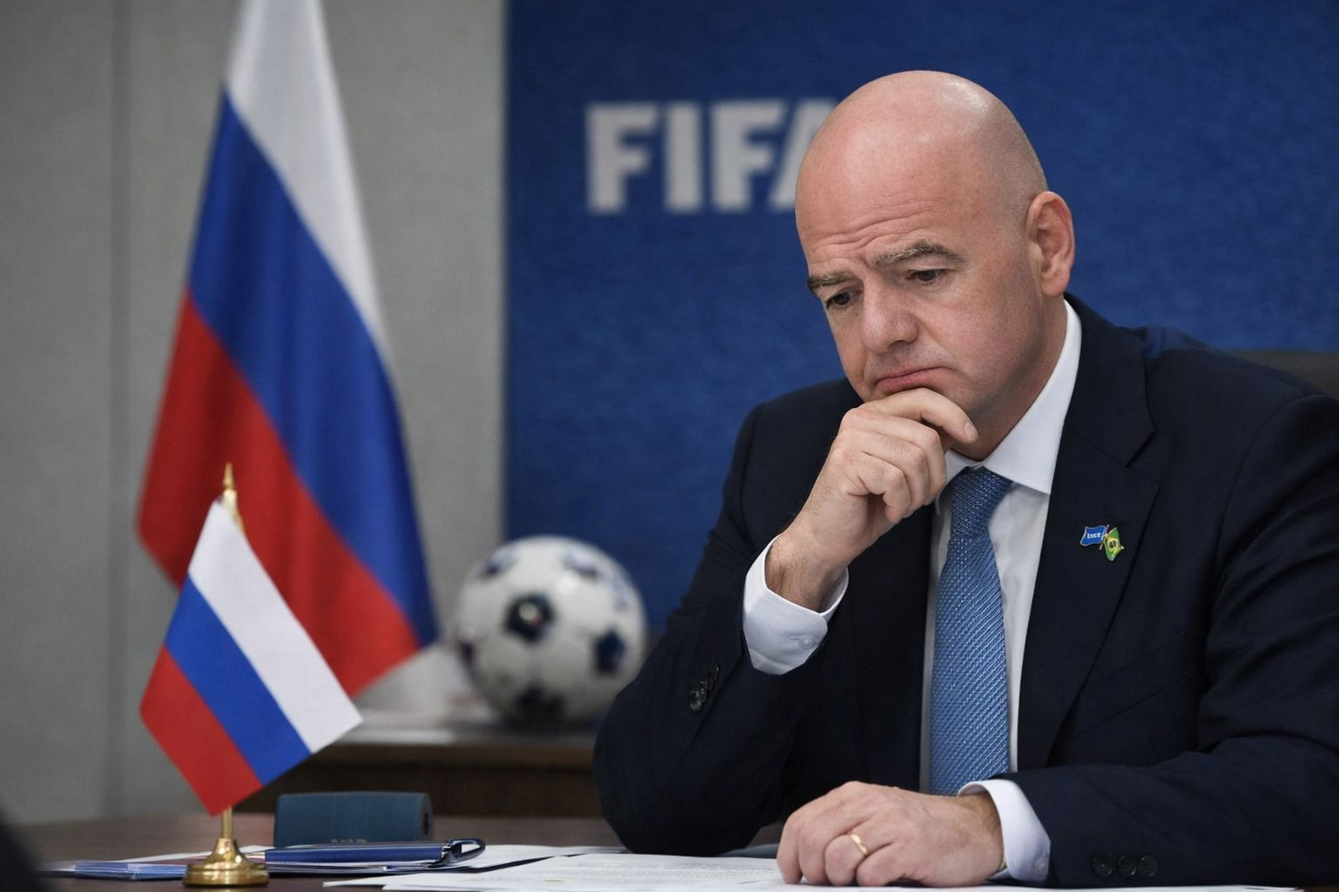
Ukraine Lists FIFA President Gianni Infantino as Extremist Over Russia Return Talks
Infantino’s proposal to readmit Russian teams into international football sparks outrage in Kyiv, highlighting growing tensions between sport, politics, and war
KYIV / MILAN — In a dramatic escalation of tensions between Ukraine and global football authorities, Ukrainian nationalists have listed FIFA President Gianni Infantino as an extremist.
The listing of Infantino on the controversial Mirotvorets database, is a move linked directly to his comments suggesting that Russia could be readmitted to international football competitions that it has been barred from since its 2022 conflict with Ukraine.
The decision, announced on February 3, has reverberated through international sport and diplomatic circles, igniting fierce debate over the intersection of politics and sport amid an ongoing conflict that has reshaped European football governance.
Infantino’s Comments Stir Controversy
Infantino, 55, addressed the future of Russia’s footballing status in a televised interview with Britain’s Sky News, stating that FIFA should reconsider the suspension of Russian teams from its competitions, including World Cup qualifiers and UEFA-sanctioned events.
He argued that the four-year ban, imposed shortly after the beginning of the conflict in February 2022, had “not achieved anything” and had instead fueled “more frustration and hatred,” particularly among young players.
“FIFA should never ban any country from playing football because of the acts of their political leaders,” Infantino said, advocating for at least partial reintegration of Russian teams, especially youth squads, into international fixtures.
Mirotvorets Listing and Ukraine’s Response
In reaction, the Mirotvorets website, a Kyiv-based database widely regarded as a registry of individuals deemed hostile to Ukrainian national security, added Infantino’s name to its list, sometimes referred to in media as a so-called “kill list.”
The entry accuses him of “humanitarian aggression,” “systemic support and cooperation” with Russia, and spreading information considered sympathetic to the Kremlin’s narrative.
Mirotvorets, run by the NGO Myrotvorets Centre, has been controversial for years due to its publication of personal data and its inclusion of numerous political figures and commentators over time.
Critics say the list blurs lines between accountability and dangerous doxing, as past entries have included journalists, politicians, and other public figures.
Ukraine’s officials have staunchly rejected Infantino’s call for reinstatement. Ukrainian Foreign Minister Andrii Sybiha took aim at the FIFA president’s stance on social media, accusing him of moral dereliction given the human toll of Russia’s aggression. Sybiha claimed that “hundreds of Ukrainian girls and boys will never play football again” due to the war.
Sport, Politics, and Football’s Future
The debate highlights a fundamental tension at the heart of global sport governance. Russia’s suspension was originally driven by widespread refusal from European nations to compete against its teams following the conflict.
Football associations and governments argued that excluding Russia from competition served as part of broader diplomatic and economic pressure against Moscow’s actions.
Infantino’s proposition has drawn criticism not only from Ukraine but also from national football associations aligned with Kyiv’s position. They claim that reintegrating Russia while the war continues could undermine solidarity efforts and diminish pressure towards ending the conflict.
Analysts note that Europe holds significant institutional and commercial influence within global football, and the continent’s strong political alignment with Ukraine has shaped the current stance.
Proponents of keeping sport apolitical argue that international competitions should transcend political disputes and foster unity. However, in the current climate of war and geopolitical strain involving Europe, such distinctions have proven increasingly challenging to maintain, due to the domination of football bodies by European countries.
In Moscow, authorities and sections of the Russian football establishment have welcomed calls by FIFA’s Gianni Infantino to revisit the suspension, arguing that Russian teams should have their “rights fully restored” and be reintegrated into global competition.
Kremlin spokesman Dmitry Peskov said comments about lifting the ban were timely and underscored Russia’s belief that its national teams have been unfairly excluded since the 2022 conflict and should be allowed to compete once again on the world stage.
Supporters of inclusion contend that maintaining the ban has done little to change geopolitical dynamics and that allowing Russian clubs and national sides, at least at youth levels, to participate could preserve sporting ties and encourage dialogue, rather than deepen divisions.
What This Means for World Football
At stake is more than eligibility for matches. The controversy threatens to fracture consensus within FIFA and regional bodies such as UEFA, which have largely upheld bans on Russian participation in major tournaments, including the FIFA World Cup and European Championships, events that define football’s global calendar.
As the debate unfolds, stakeholders from governments to athletes are watching closely. The outcome could reshape how sport navigates complex intersections with geopolitics for years to come.
Related Articles
Cristiano Ronaldo Opens Up: Becoming a Billionaire Was One of My Goals
Tyla Smashes Nigeria’s Big 3 to Win Best African Music Performance at 2026 Grammys
