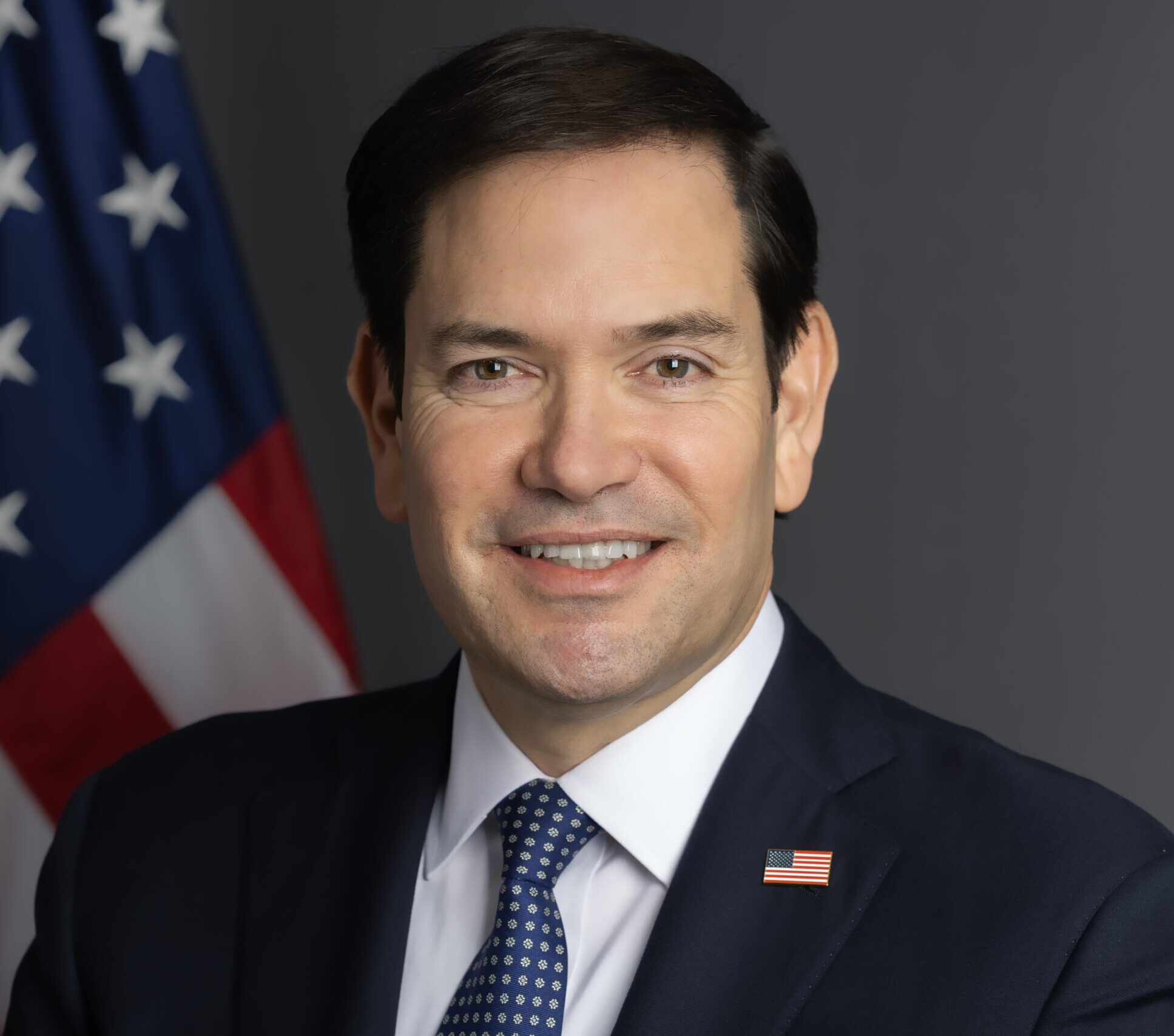
Rubio Warns of Expanding Global Threat as Radical Islamist Movements Target the West
Washington, D.C. – December 7, 2025
U.S. Secretary of State Marco Rubio has issued one of his strongest warnings yet about the global ambitions of radical Islamist movements, arguing that the world, particularly the United States, faces a growing and long-term existential threat that cannot be underestimated or wished away.
His remarks come amid a resurgence of extremist activity across multiple regions and increasing intelligence assessments that radical networks are rebuilding capacity.
Rubio’s central argument is blunt: radical Islamist ideologies do not seek territorial coexistence, they seek ideological domination. And history, he insists, proves it.
Radical Islamist Ambitions Are Global, Not Local
Rubio rejected the notion that extremist groups are content with isolated caliphates or fragmented strongholds in the Middle East, pointing out that no major radical Islamist movement has ever limited its ambitions to a single region.
“The idea that radical Islam would simply be comfortable controlling some province in Iraq or Syria is not borne out by history,” Rubio stated.
From al-Qaeda to ISIS, Boko Haram to Al-Shabaab, each of these groups has expanded far beyond its original geographic footprint. Their declared goal has consistently been the same: the transformation of societies, the toppling of governments, and the destruction of Western influence.
Rubio emphasized that the ideological framework underpinning these movements is inherently expansionist, revolutionary, and totalitarian.
The West, and Particularly the United States Is the Ultimate Target
In his assessment, Rubio pointed out that extremist networks openly identify the West, especially the United States, as “the greatest evil on Earth.” This worldview, he argued, is fundamental to their ideology, not a reaction to Western policies.
This is clearly reflected in The 9/11 attacks, ISIS-inspired terror strikes across Europe, the rise of lone-wolf attacks in the U.S., Iran-linked assassination plots targeting dissidents, diplomats, and Western officials, and online radicalization networks that recruit attackers globally.
Rubio highlights that the threat is not theoretical. It has already materialized repeatedly, and the ideological mandate for further attacks is explicit.
U.S. Partners in the Middle East Also Face Hostility
Rubio further noted that American partners such as Saudi Arabia, the UAE, and Bahrain are targeted not only because of their Western cooperation but because extremists view them as “infidels” for aligning with the U.S. and participating in counterterrorism efforts.
These nations serve as strategic buffers that help prevent extremist groups from overtaking regional power centers making them critical to global stability.
Radical Islam Targets the Homeland: A Clear Pattern
Rubio underscored that most successful domestic attacks over the past two decades have roots in radical Islamist ideology.
He cited key examples such as the Pulse nightclub massacre in Orlando, the Pensacola Naval Air Station attack, carried out by a Saudi trainee radicalized online, the Boston Marathon bombing, and multiple ISIS-inspired lone-wolf attacks across U.S. cities.
Rubio also stressed the unique danger posed by Iran, describing it as “the most active state sponsor of terrorism in the world.”
Unlike non-state actors, Iran wields a structured intelligence apparatus, proxy militias, global assassination networks, sophisticated cyber capabilities, long-range weapons systems.
This state-level support gives extremist operations greater reach, coordination, and lethality.
A Persistent and Evolving Threat
Rubio insisted that radical Islamist movements remain “a clear and imminent threat to the world and to the broader West,” noting that their operations have evolved, from territorial conquest and formal armies to decentralized, digital, and transnational networks.
These groups adapt quickly, exploit political vacuums, and leverage global technology to expand their reach.
A Warning the West Cannot Ignore
Senator Marco Rubio’s warning is a reminder that global security threats cannot be minimized for the sake of political convenience or wishful thinking.
The ideology driving radical Islamist movements is expansionist, persistent, and fundamentally incompatible with pluralistic and democratic societies.
Rubio’s message is unequivocal, Radical Islamists will not stop on their own. They will continue targeting the U.S. and its allies. Their long-term goal is ideological domination, not coexistence.
As Rubio cautions, the threat is not distant or abstract, it is global, current, and deeply intertwined with America’s national security.
