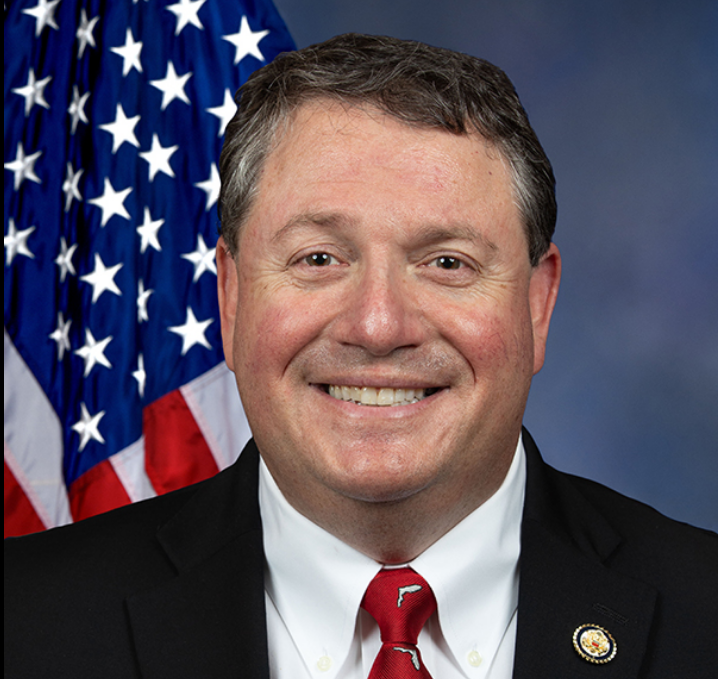
Rep. Randy Fine Backs U.S. Resolution Targeting Nigeria Over Christian Killings
Washington D.C. – December 4, 2025,
In a forceful and highly consequential political move, U.S. Representative Randy Fine has cosponsored a congressional resolution calling for Nigeria to be designated a Country of Particular Concern (CPC) over the “genocide” against Christians.
Fine announced the decision in a blistering social media post that has intensified scrutiny of Nigeria’s human rights crisis and the government’s increasingly criticized handling of religiously motivated violence.
“The ongoing slaughter of innocent Christians by Muslim terrorists in Nigeria is APPALLING. The Nigerian government’s silence is DEAFENING,” Fine wrote.
“I signed onto Congressman Chris Smith’s resolution calling on Congress to codify President Trump’s executive order, which labeled Nigeria as a particular country of concern over the massacre of Christians. Their complicity in the GENOCIDE of thousands of Christians must stop, and we must take action to fully condemn this NOW.”
Fine’s statement aligns with a growing bipartisan chorus in Washington asserting that Nigeria’s spiraling religious violence especially in the Middle Belt and northern regions has crossed every threshold of international concern.
Trump’s Repeated Warnings: “We Will Annihilate the Terrorists”
U.S. President Donald J. Trump has, over time, issued some of the most forceful critiques of Nigeria’s failure to curb terrorism. Trump emphasizeddirect U.S. intervention to “annihilate” Islamist terrorists if Nigeria failed to secure Christian communities.
Washington has accused Nigerian authorities of “turning a blind eye” to massacres carried out by armed Fulani groups, Boko Haram, and ISIS-West Africa, and has warned that the United States “would not stand by while Christians are slaughtered.”
These pronouncements were met with deep hostility from the Nigerian government, which publicly rejected Trump’s assessments and privately expressed fear that American involvement would expose entrenched official complicity in the terror ecosystem.
It was under Trump first administration that the U.S. first designated Nigeria a Country of Particular Concern, a label reserved for states that systematically violate religious freedom or tolerate faith-based persecution.
The Biden administration controversially reversed that designation, prompting outrage from rights groups and renewed pressure from lawmakers like Rep. Chris Smith and Randy Fine to reinstate it.
The Kabiru Sokoto Scandal: A Shadow Over Nigeria’s Political Leadership
Adding to this international skepticism is one of the most infamous terrorism scandals in Nigeria’s modern history such as the arrest of Boko Haram mastermind Kabiru Sokoto inside the Borno State Government House in Abuja, then under the governorship of Kashim Shettima, Nigeria’s current Vice President.
Kabiru Sokoto was the architect of the 2011 Christmas Day bombing that killed more than 40 worshippers at St. Theresa Catholic Church in Madalla.
His presence inside a state government facility, later confirmed by police, raised chilling questions about high-level political protection for terrorists.
Though the Nigerian government tried to downplay the incident, the damage was irreversible: it deepened global suspicion that terrorism in Nigeria was not merely a security failure but a networked system with political fingerprints.
For many foreign policymakers, the Sokoto scandal remains a defining example of why external pressure, such as CPC designation, may be necessary to force systemic change.
A Government Under Fire
As Rep. Fine’s comments gain traction, Nigeria faces mounting pressure from Human rights organizations, International religious freedom advocates, and Members of the U.S. Congress.
The central accusation is that the Nigerian government has failed to protect Christian communities and are indirectly enabling extremist violence through inaction, political alliances, or deliberate silence.
Fine’s framing, “the government’s silence is deafening” captures a sentiment widely shared among advocacy groups who argue that the Nigerian state often reacts slowly, inconsistently, or not at all to mass killings, village burnings, and abductions targeting Christian populations.
A Turning Point?
If the U.S. Congress adopts the Fine-Smith resolution, the move could trigger Sanctions on Nigerian officials deemed complicit in religious persecution, Restrictions on military cooperation, Increased U.S. funding for monitoring religious freedom violations, and A diplomatic crisis between Washington and Abuja.
For now, the momentum is clearly shifting. The world is watching. And lawmakers like Randy Fine insist that the United States must not remain passive in the face of mass atrocities.
Whether Nigeria adjusts its security strategy or doubles down on silence may determine the next phase of one of Africa’s most troubling and consequential human rights crises.
