Nigeria’s Christmas Airstrikes and the Battle Over Truth
Intelligence, accountability, and the controversy surrounding a global media narrative
Abuja, Nigeria – January 19, 2026
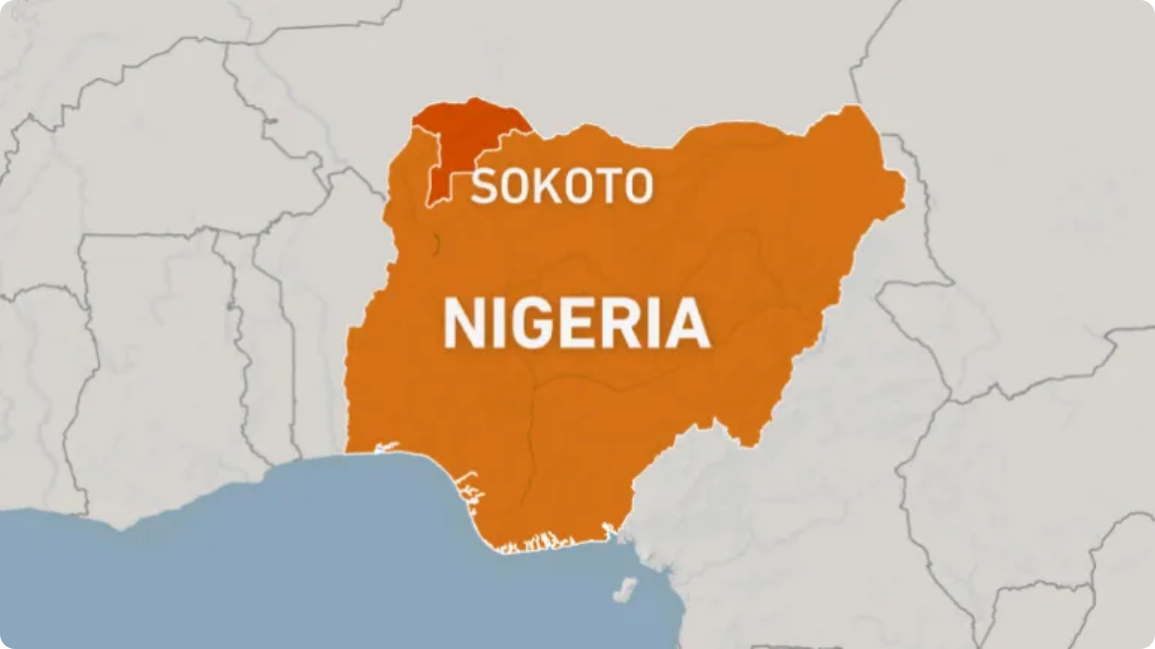
When United States airstrikes struck Fulani terrorist targets in Sokoto State, Nigeria, on Christmas Day, the explosions were followed almost instantly by another kind of blast: a global debate over Nigeria’s sovereignty and the federal government’s role in the Fulani terrorist crisis.
This debate quickly transformed into who shaped the intelligence utilized by the U.S government in the raid, success or failure of the operation, whose data mattered, and whether international media told the full story.
Nigeria’s own government was quick to publicly clarify that the intelligence underpinning the operation which Donald Trump called a Christmas gift to Nigerians, was provided by Nigerian security agencies themselves.
This statement suggesting of a collaborative effort in targeting ISIS in Northwestern Nigeria undermined the argument of a breach of Nigeria’s territorial integrity emanating from Northern elites.
Critics argued that this statement desperately sought to send the message that the Nigerian government is committed to collaborating with the U.S. in their fight against terrorism.
At the center of the controversy is whether Nigerians and the world believe the commitment of the Nigerian government towards bringing an end to Fulani Jihadist.
A recent report by The New York Times suggested that Republican lawmakers in Washington relied heavily on casualty figures compiled by a “Screwdriver Salesman in Onitsha,” Emeka Umeagbalasi, to justify the strikes, negating the intelligence provided by Nigeria government.
The report raises serious questions, as one cannot on one hand say Nigeria supplied the intelligence, and on the other imply that U.S. military action rested on the spreadsheets of an illiterate private citizen in a market square.
Nigeria’s Government: “We Supplied the Intelligence”
Following the Christmas operation, Nigerian officials made it clear that the strikes were carried out in coordination with Abuja and based on intelligence generated by Nigerian security services.
The federal government emphasized that the targets were terrorist camps and that the operation formed part of ongoing counterterrorism cooperation with its international partners.
This official position complicates the narrative recently advanced by the New York Times, which foregrounded U.S. domestic politics and the use of civil society data in Washington.
If Nigerian intelligence agencies bore responsibility for identifying targets, as the government insists, then the implication that disputed external figures drove lethal military decisions as New York Times claims becomes difficult to sustain.
Critics argue that this gap is misleading to readers about both country’s intelligence agencies and accountability. The intelligence question is not a footnote. It goes to the heart of who authorized, who verified, and who must answer.
Emeka Umeagbalasi: Credentials, Not Caricatures
The New York Times’ portrayal of Emeka Umeagbalasi has drawn heavy criticism within Nigeria and the diaspora.
Described primarily by the New York Times as a “Screwdriver Salesman” and unqualified, Umeagbalasi is in fact a trained criminologist, a long-time human rights researcher, and the founder of the International Society for Civil Liberties and Rule of Law (Intersociety).
For more than a decade, Intersociety has documented extrajudicial killings, mass displacement, and all types of violence across Nigeria, publishing reports cited by advocacy groups, lawmakers, and international actors.
Crucially, while his findings are debated in the public sphere, they have never been invalidated by any court, nor has his organization been sanctioned for falsification of data.
Legal analysts note that in a country where defamation and cybercrime laws are frequently used against activists, this distinction matters, raising serious questions about the reason for the framing and implications of the New York Times’ account.
Data, Law, and the Limits of Contestation
Human rights reporting in conflict zones is rarely neat. Casualty figures may differ, methodologies may clash, and access is often limited. But disagreement alone does not equate to unreliability under the law.
Umeagbalasi’s work, critics argue, exists within a long tradition of civil documentation filling gaps left by weak state transparency. Where the Nigerian government disputes figures, usually in support of lesser casualty, it has typically done so rhetorically, not judicially.
This legal reality stands in contrast to the tone of skepticism implied in the Times’ report, which critics say risks blurring the line between methodological debate and character undermining.
Media Power and Narrative Responsibility
At stake is more than one man’s reputation. The episode exposes how global media narratives can assassinate character and subtly reassign responsibility.
By centering U.S. political actors while reducing a Nigerian civil society researcher to a dismissive label such as a “Screwdriver Salesman,” critics argue that The New York Times framing diminished the role of qualified Nigerian citizens who, by circumstance and expertise, have found themselves documenting the realities of terrorism and mass violence in their own communities.
At the same time, the approach is said to have downplayed the role of Nigerian state institutions, which have publicly stated that they provided the intelligence that led to the airstrike.
Critics contend that this imbalance not only distorts accountability for a military action carried out on Nigerian soil but also shifts attention away from the responsibilities of the state in favor of a simplified and misleading narrative.
For observers in Nigeria, this is not a minor editorial choice. It shapes how accountability is perceived, both domestically and internationally.
When media stories travel farther than government statements, framing becomes a form of power.
The Christmas airstrikes will likely be used to fuel controversy. Fulani terrorism and state failure continue to claim lives across Nigeria, Christians and some moderate Muslim alike. But the debate sparked by the Times’ reporting reveals a deeper fault line: who gets to define reality in conflicts where information itself is a weapon.
As long as Nigeria maintains that it supplied the intelligence, and as long as researchers like Emeka Umeagbalasi operate lawfully within the civic space, any account that sidelines these facts will continue to face scrutiny.
In conflicts of this magnitude, precision is not optional. It is the difference between illumination and distortion.
Related Articles
Nigeria Government Signs $9 Million US Lobbying Contract to Deny Christian Genocide
