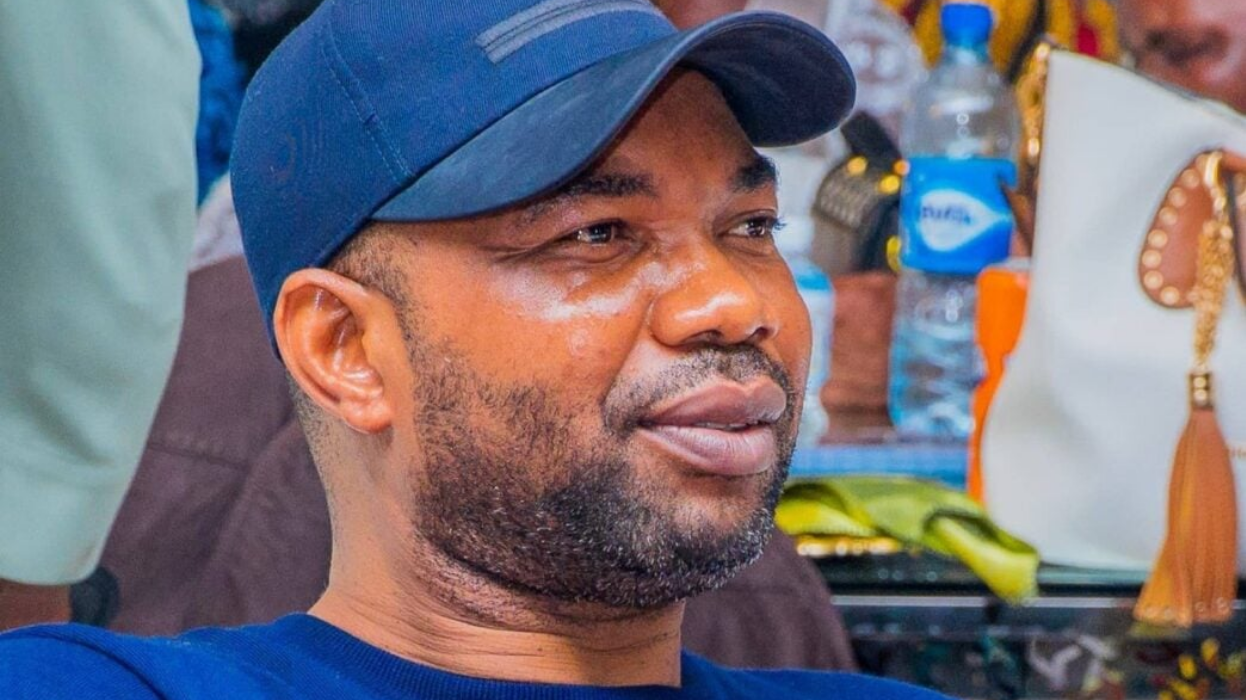
Nigerian Businessman Hires U.S. Lobbying Firm for $720,000 Deal
A Nigerian businessman, Matthew Tonlagha, has contracted Valcour Global Public Strategy, a U.S. based lobbying and public strategy firm, on a six-month, $720,000 engagement to bolster relations between the United States and Nigeria.
The arrangement reflects a growing trend among Nigerian wealthy figures and government entities of using professional lobbyists in Washington to influence diplomatic and policy narratives amid ongoing ravaging insecurity, failed economy, and political instability in Nigeria.
This follows earlier revelations by Peoples Chronicles about the $9 million dollars Nigerian government sponsored lobbying contract with a U.S. lobbying firm DCI group.
Who Is Matthew Tonlagha?
Matthew Tonlagha hails from Benikrukru, Gbaramatu Kingdom, in Delta state.
He serves as the vice-chairman of Tantita Security Services which has played a key role in oil pipeline surveillance in the Niger Delta, a region critical to Nigeria’s energy industry but long beset by militancy, massacres, and environmental crisis due to decades of oil leakage.
A former militant Government Ekpemupolo, mainly known as Tompolo, is the chairperson of the oil pipeline surveillance company.
Through his company, Maton Engineering Nigeria Limited, he signed the lobbying contract with Valcour Global Public Strategy on December 16, 2025.
The contract is to provide strategic communications and government affairs services targeting engagement with U.S. media, Congress, and the executive branch to promote stronger United States–Nigeria bilateral relations.
Lasting a duration of Six months, from December 15, 2025 to June 14, 2026.
The fee is $120,000 per month, totaling $720,000, payable quarterly in advance.
Valcour was founded by Matt Mowers, who previously served as a senior White House adviser in the U.S. State Department during the first term of President Donald Trump. His background and political connections likely inform Valcour’s positioning as a Washington strategic adviser.
Before the formal contract registration, Tonlagha’s company also paid retainer fees of $105,000 to Bridgeway Advocacy on December 31, 2025 and the sum of $60,000 to Mount Olives LLC on January 5, 2026 as subcontractors.
Context of U.S.–Nigeria Lobbying
Tonlagha’s lobbying engagement is not occurring in isolation. It comes on the heels of other significant lobbying efforts by Nigerian actors and the Government of Nigeria.
The Nigerian government itself signed a $9 million lobbying contract with DCI Group, a separate U.S. firm, aimed at communicating Nigeria government’s narrative that actions are being taken to ensure the security and protection of communities amid international scrutiny, especially around religious violence and the U.S. designation of Nigeria as a Country of Particular Concern under the International Religious Freedom Act.
U.S. lawmakers have publicly debated these lobbying efforts. Rep. Chris Smith recently expressed his concern “that Nigeria has hired the lobbying firm, DCI, to the tune of $9 million, $750,000 a month.” He further expressed worry that “a Nigerian billionaire has entered into a $120,000 a month contract with the Valcour to influence Congress & the executive branch,” underscoring the refusal of Nigerian leaders to bring an end to the genocide and human right abuses.
Critics argue that such contracts reflect a tendency to “spin” narratives rather than addressing underlying security issues directly, pointing to a “culture of denial.”
These trends illustrate how lobbying in Washington has become a tool for international image management, diplomatic influence, and policy advocacy for both private and state actors from Nigeria rather than investing in lasting solution.
Implications for Bilateral Relations
Tonlagha’s contract signals several wider implications:
- Diplomatic Signalling
By investing in professional image making in Washington, Nigerian business and policy actors are indicating an intent to shape perceptions among U.S. policymakers and media through targeted information, potentially affecting trade, security cooperation, foreign direct investment, and bilateral diplomatic discourse.
- Intersection of Public and Private Interests
This deal blurs lines between private enterprise interests and broader foreign policy goals. While Tonlagha’s work is privately contracted, its stated aim intersects with government priorities of enhancing U.S.–Nigeria ties, especially during heightened international attention on issues like the ravaging insecurity and religious freedoms.
- Washington’s Influence Economy
The engagement underscores how international actors , including individuals, companies, and governments, engage U.S. political and policy systems through lobbying. Such activities are regulated under the U.S. Department of Justice’s Foreign Agents Registration Act (FARA), which demands transparency about foreign interests seeking influence.
Conclusion
The $720,000 lobbying contract undertaken by Matthew Tonlagha through Valcour Global Public Strategy highlights the strategic role of professional advocacy in international relations.
Beyond mere communication, this engagement reflects broader efforts by Nigerian stakeholders to navigate and shape diplomatic narratives in Washington.
It also aligns with a larger pattern of Nigeria engaging U.S. lobbying firms, both from the public sector and private individuals, to influence bilateral policy discourse and media narratives amid challenging domestic issues, signaling an unwillingness to change the disastrous direction of the country.
Related Articles:
Propaganda, Distractions as Kanu’s Appeal Nears, Lolo Okwu-Kanu Cries Out
Nworu Slams Southeast Politicians Over Using Kanu’s Detention For Politics
IPOB Warns of Gov’t Plot to Spark Religious Violence in Biafraland
Over 170 Killed in Fulani Terrorist Attack in Nigeria’s Kwara State
