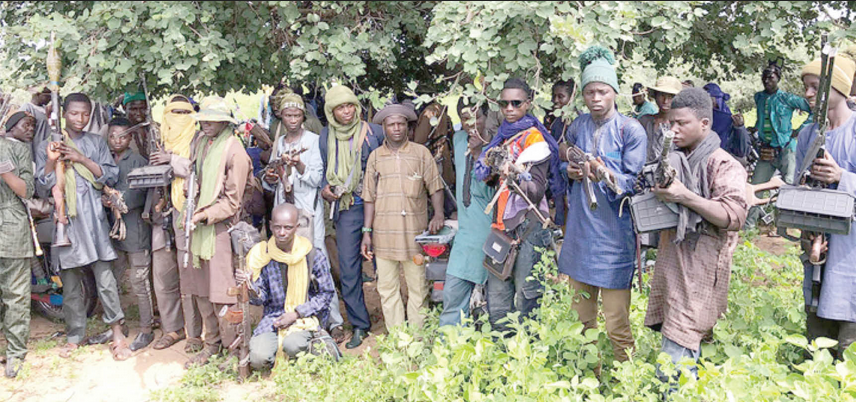
Mass Abduction in Kaduna: Over 160 Churchgoers Kidnapped During Service
Abuja, Nigeria – January 20, 2026
In a development that has sent shockwaves through Nigeria, reports emerged on Monday of a mass abduction of worshippers during Sunday services in Kurmin Wali, Kajuru Local Government Area, Kaduna State.
According to eyewitness and community sources, Fulani terrorists stormed several churches and seized scores of congregants, sparking fresh concern over the country’s deepening security crisis.
Eyewitnesses told SaharaReporters that attackers forced their way into churches while services were ongoing, abducting more than 160 churchgoers, including men, women, and children. Around 10 vulnerable persons were later released by the assailants, the source said.
Authorities and security agencies were reportedly notified, and efforts were underway to clarify the full scale of the incident.
Conflicting Claims: Police Denial vs Community Accounts
However, while community members and religious leaders confirm the attack, officialdom has moved to counter the narrative.
The Kaduna State Police Command claims the allegations of mass abduction are falsehoods being circulated by “conflict entrepreneurs” and urged calm among residents.
The Police Commissioner Muhammad Rabiu, said that anyone alleging the kidnappings to produce names and particulars of the supposed victims.
Religious Leaders Confirm Large-Scale Abduction
Contrasting sharply with the police’s position, Christian Association of Nigeria (CAN) leaders in Kajuru LGA insist that a serious abduction did take place.
According to CAN’s Enoch Kaura, as many as 172 worshippers were initially seized, and 163 were still missing after nine managed to escape.
The victims were reportedly taken during the service, blocked at the church entrance, and forced into nearby bushland by the Fulani terrorists.
Mr. Kaura described the incident as a grave escalation in the insecurity plaguing the area, emphasising that women, men, and children were among those taken.
The continued denial from security agencies has heightened fears among families and community members desperate for clarity and rescue.
Security Situation: A Broader Pattern
Whether the exact number of the abducted remains disputed, with estimates varying between official denial and community reports of over 160, the incident highlights the fragility of public safety in different corners of Nigeria.
Kaduna State has witnessed a series of deadly attacks by Fulani terrorist groups, with banditry and mass kidnappings becoming increasingly common, often targeting Christian communities with no security presence.
The attack adds to a litany of Fulani terrorism that have strained public confidence in state protection, with residents repeatedly calling for more robust and effective security responses.
As families seek the return of loved ones, questions persist about the capacity of authorities to prevent such brazen terrorism in areas long afflicted by insecurity, and their complicity.
Calls for Transparency and Action
Reacting to the reports, U.S. Representative Riley M. Moore wrote on his X account (formerly Twitter):
“Horrific news. Armed radical Muslim Fulani militants attacked three churches yesterday and abducted more than 100 Christian worshippers.
Our brothers and sisters in Christ are facing an existential threat at the hands of Fulani militants. More must be done to protect them, and I urge the Nigerian government to ensure the swift and safe return of all those who were taken.”
The conflicting narratives, between community leaders and security officials, underscore the urgent need for transparent investigations and clear communication from authorities.
It is undeniable that there’s deep anxiety gripping families and faith communities across Kaduna. As the story continues to unfold, pressure mounts on security agencies to actually investigate the crime and ensure the safety of Nigerian Christians.
Related Articles
U.S. Lawmaker Exposes Firsthand Account of Christian Killings in Nigeria
