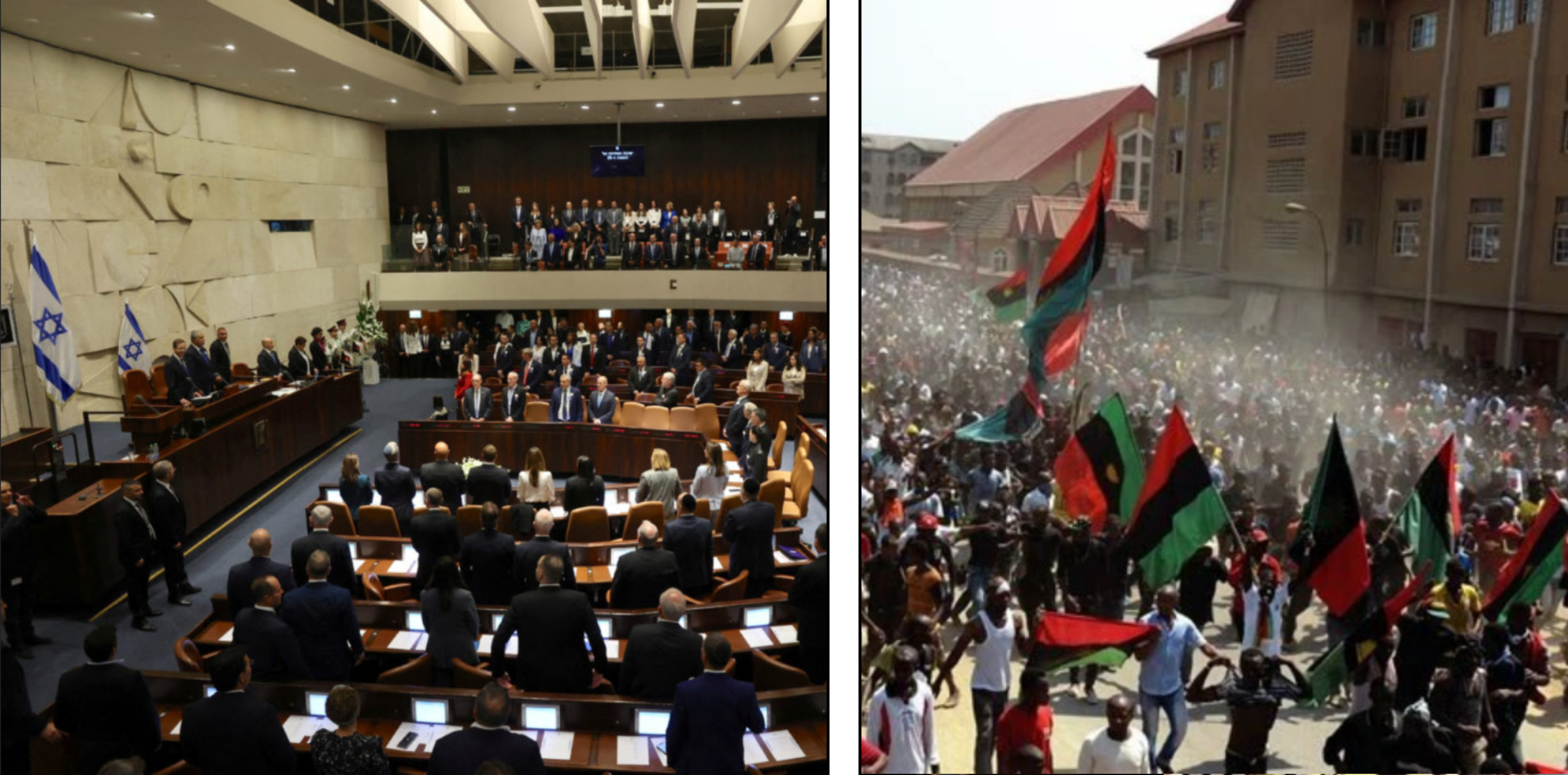
Israeli Parliament Debates Biafra, Signals Possible Further Engagement
Knesset session acknowledges humanitarian concerns, signals possible working groups for continued dialogue
Jerusalem, Israel – The Israeli Parliament has formally debated the situation of Biafra, a region forcefully trapped in Nigeria, marking a significant moment for international attention on the long-running self-determination drive in Eastern Nigeria.
The discussion at the Knesset has now sparked renewed international diplomatic conversations and promises of further engagement.
The debate followed advocacy efforts by pro-Biafra figures in Israel and featured remarks from Israeli lawmakers addressing the devastating humanitarian concerns in the region, likening it to the Jewish Holocaust.
During the session, Israeli lawmaker Ya’akov Margi, addressed the parliament on the urgent humanitarian issues affecting people in Biafraland. He referenced historical and contemporary grievances such as the 1967 – 1970 Biafra genocide and urged broader international awareness of the matter.
Highlighting escalating threats of Fulani terrorism in the Eastern region, he noted that Islamic terrorists from the Northern region with encouragement from the Nigerian government invade the Biafran territory to commit Jihad.
The lawmaker reiterated the need for Israel to take the opportunity presented in international forum to raise the persecution of the Biafran people.
“I call here… to the great world, to the entire world, to wake up, to put this in the agenda,” he said urging the Foriegn Deputy Minister Sharren Haskel to make the Biafran issue a priority.
Responding on behalf of the government, Deputy Foreign Minister Sharren Haskel acknowledged the concerns raised while stating that “the case of the Biafra region is really a very, very difficult case.”
She expressed empathy for communities facing persecution and indicated that the issue would receive further discussion within relevant parliamentary committees while reinforcing that insecurity is today ravaging all corners of Nigeria.
Haskel reportedly suggested that additional engagement could occur through working groups or committee-level discussions to examine humanitarian dimensions more closely while referencing Israel’s latest humanitarian efforts in South Sudan.
Statements from Biafra Advocates in Israel
Following the parliamentary debate, Biafra advocates present in Knesset released statements describing the session as historic.
Mrs. Rachel Nwosu, speaking from the Knesset premises, said:
“Today we make history in Israel after 56 years. The Knesset talked about Biafra, talked about the humanitarian situation, and the urgent need for engagement. We are doing this with our hearts for Biafra.”
She described the speech delivered by Margi as emotional and impactful, stating that it reinforced calls for humanitarian consideration.
Nwosu further stated that the Speaker of the Knesset acknowledged the agenda item and that several members expressed willingness to continue discussions in structured parliamentary settings.
Also speaking was the Israeli national coordinator of the Indigenous People of Biafra (IPOB), Mazi Victor Uchenna Obilo who described the debate as unprecedented within the Israeli Parliament and expressed gratitude to supporters who facilitated the discussion.
“Before now there is nothing whatsoever of this nature that has happened in the Knesset,” Obilo said, adding that recognition at parliamentary level marked a new phase of international visibility.
Diplomatic Balance and Next Steps
While the debate represents increased visibility for the Biafra question, Israeli officials stopped short of announcing policy shifts or intervention measures. Observers note that Israel maintains diplomatic, economic, and security ties with Nigeria and is likely to approach the issue through cautious diplomatic channels.
Nigeria, Africa’s most populous nation and a significant economic partner, maintains robust relations with Israel, including cooperation in areas like security and technology.
Advocates of Biafra argue that global powers must not ignore historical injustices and current humanitarian concerns in Nigeria.
The session nonetheless signals a willingness within the Knesset to allow humanitarian discussions to proceed within parliamentary frameworks. The Biafran people expect that the debate is the beginning of a journey that will translate into diplomatic initiatives, international advocacy, and formal resolutions and recognition.
For now, advocates describe the development as a symbolic breakthrough.
The debate has once again amplified global attention on Biafra as the solution to the decades long dehumanization of the region, placing the issue within a broader international parliamentary context.
Related Article:
Chinasa Nworu Warns of ‘Bigger Battle’ for IPOB in 2026, Confirms Foreign Interests
Mazi Chika Edoziem Calls for “Reclaiming Sovereignty,” Accuses Igbo Politicians of Betrayal
