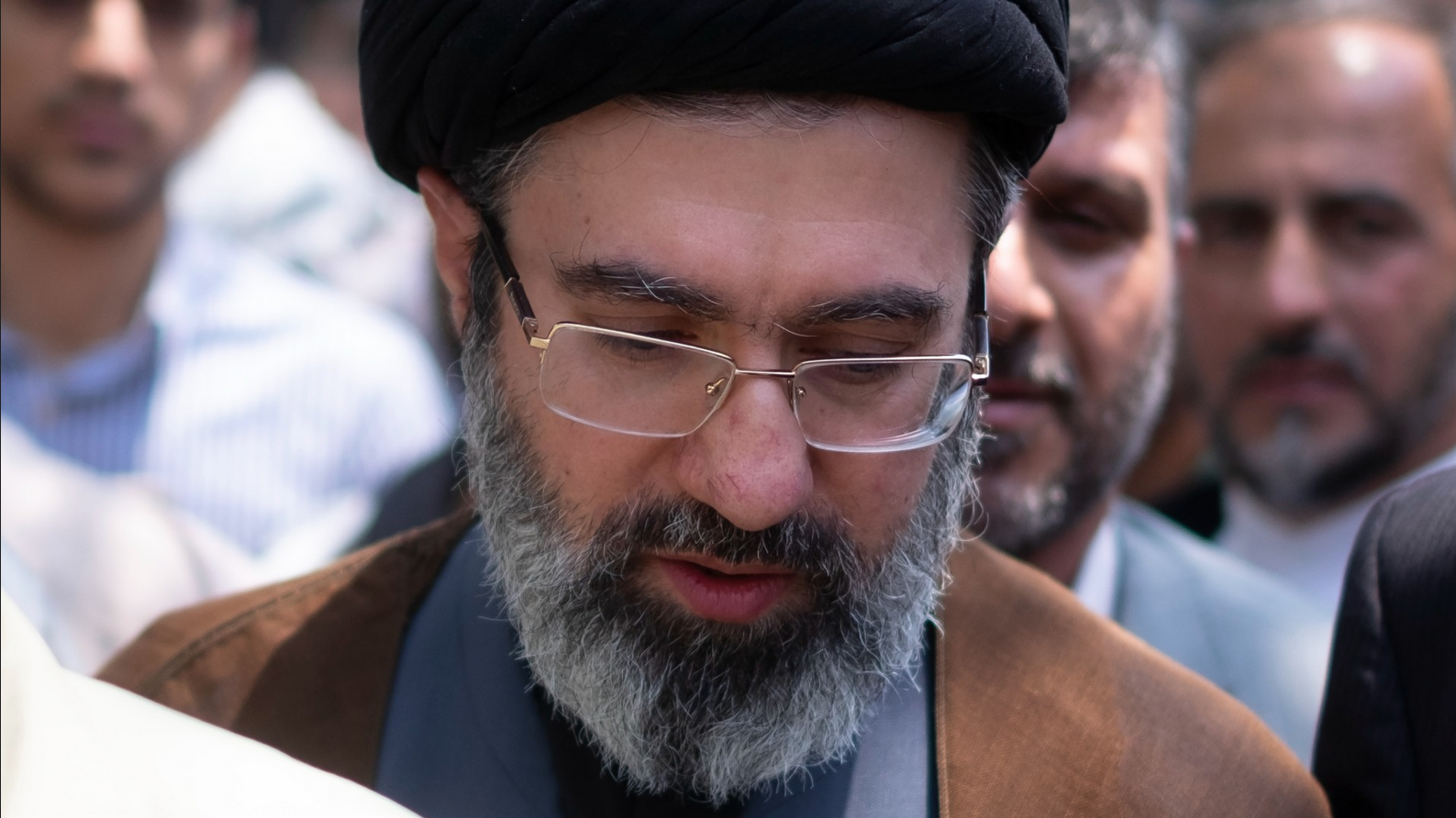
Iran Names Mojtaba Khamenei Supreme Leader After Father’s Death
Iran has officially named Mojtaba Khamenei as the country’s new Supreme Leader, succeeding his father Ali Khamenei, whose death during recent military strikes triggered one of the most dramatic leadership transitions in the history of the Islamic Republic.
The decision was made by the Assembly of Experts, the council of clerics tasked under Iran’s constitution with appointing and supervising the country’s supreme authority.
The body selected Mojtaba Khamenei on 8 March 2026, contrary to ideological foundation of the Islamic republic, marking the first time in the Islamic Republic that a son has directly succeeded his father in the role.
The leadership change comes at a moment of profound crisis for Iran, as the country remains locked in an escalating regional conflict that has already disrupted global energy markets and heightened tensions across the Middle East.
A sudden transition after a wartime assassination
The succession follows the death of Ali Khamenei, who had ruled Iran as Supreme Leader since 1989. Iranian authorities confirmed he was killed on 28 February 2026 during a series of coordinated airstrikes targeting senior Iranian leadership in Tehran.
His death created a rare leadership vacuum at the top of Iran’s political and religious hierarchy. Under the constitution, an interim leadership council briefly assumed authority while clerics deliberated on a permanent successor.
Within days, the Assembly announced Mojtaba Khamenei as the country’s third supreme leader since the 1979 Islamic Revolution.
A figure long seen as a potential successor
Born in Mashhad in 1969, Mojtaba Khamenei is a Shiite cleric educated in the religious seminaries of Qom. Though he held no elected office during his father’s rule, he was regarded by some quarters as one of the most influential figures within Iran’s power structure.
Analysts have long pointed to his close ties with the Islamic Revolutionary Guard Corps, the military and security institution that plays a central role in Iran’s political system. These relationships helped solidify his standing among conservative factions within the Iranian establishment.
Support from the Revolutionary Guards and senior political figures reportedly played a decisive role in securing his elevation to the country’s highest office.
Controversy over a dynastic transition
Mojtaba Khamenei’s appointment has sparked intense debate both inside and outside Iran. Critics argue that the move resembles a dynastic succession more commonly associated with monarchies, an outcome that contradicts the ideological foundations of the Islamic Republic, which emerged from a revolution that overthrew a hereditary monarchy in 1979.
Despite the criticism, Iran’s political and military institutions have publicly rallied behind the new leader, calling for unity amid the ongoing war and growing external pressure on the country.
A leadership change amid escalating war
The appointment comes during one of the most volatile periods in Iran’s modern history. The regional conflict involving Iran, Israel and the United States has already triggered missile exchanges, drone strikes and attacks on strategic infrastructure across the Middle East.
The crisis has also rattled global markets, with oil prices surging and shipping routes in the Strait of Hormuz facing potential disruption.
For Iran’s new leader, the immediate challenge will be navigating a country at war while preserving internal stability and the ideological foundations of the Islamic Republic.
The road ahead for Iran’s new leader
As Supreme Leader, Mojtaba Khamenei now assumes ultimate authority over Iran’s armed forces, judiciary and key state institutions, making him the most powerful political figure in the country.
Observers say his leadership will likely reinforce Iran’s hardline political orientation, particularly as tensions with Western powers continue to rise.
Whether his rule brings consolidation or deeper instability remains uncertain. What is clear, however, is that the Islamic Republic has entered a new and unpredictable chapter under the leadership of the son of its longest-serving ruler.
Related Articles:
Iran’s Revolutionary Guard Vows ‘Most Devastating Offensive Operation’
Breaking: Lolo Chimezie Raises Alarm Over State Complicity in South-East Crisis
BREAKING! IPOB Raises Alarm Over Targeted Crackdown on Members
