High Tensions Escalate After Trump Skips G20 and Bars South Africa From Future Meetings
Johannesburg, South Africa, December 14, 2025
In a dramatic and unprecedented rupture of diplomatic norms, relations between Washington and Pretoria have deteriorated sharply after U.S. President Donald Trump refused to attend this year’s G20 summit in South Africa and later moved to exclude the country from the next G20 gathering in the United States.
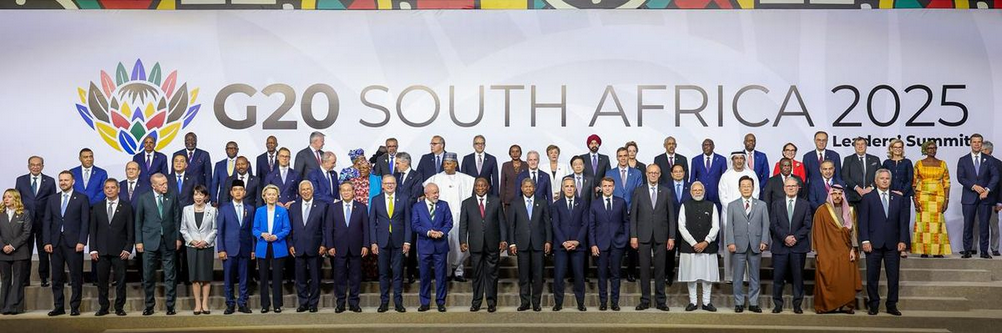
South Africa was scheduled to host the G20 Leaders’ Summit in Johannesburg, the first time the bloc’s key meeting would be held on African soil.
President Trump, citing allegations of human rights abuses in South Africa, refused to send a U.S. delegation.
He posted on social media that America would not attend as long as what he described as mistreatment of South African minority groups continued, a characterization Pretoria has repeatedly and categorically rejected.
Trump’s absence was not merely symbolic. He took the extraordinary step of signaling that South Africa would not be invited to the 2026 G20 summit planned for Miami, Florida, breaking with longstanding diplomatic precedent which treats G20 membership and participation as automatic for founding members.
According to his public statements, this exclusion was justified on grounds that the South African government had failed to address what he described as “horrific human rights abuses” and discriminatory policies.
Both Foreign Affairs Minister Ronald Lamola and President Cyril Ramaphosa have disputed Trump’s assertions, calling the human rights allegations unfounded and politically motivated.
Lamola underscored that Pretoria sees no basis for punitive diplomatic measures over claims that are widely considered misleading. He made clear that South Africa would not participate in future G20 meetings “without a formal invitation,” even while maintaining that an invitation has not been received in writing.
Finance Minister Enoch Godongwana echoed his view, condemning allegations of genocide and portraying them as distortions with dangerous implications.
Government officials have repeatedly emphasized that South Africa remains a constitutional democracy committed to human rights and rule of law, dismissing claims of systematic racial persecution as unsupported by credible evidence.
Ramaphosa himself framed the boycott as a misstep by Washington, urging the U.S. to reconsider its position and warning that boycott politics never really work.
He stressed that the summit would go ahead with or without U.S. participation, a sentiment that was borne out when the Johannesburg gathering concluded with leaders adopting a declaration addressing global issues despite America’s absence.
The standoff has exposed deeper strains in U.S.-South Africa relations that extend beyond the G20.
Diplomatic tensions have been building over several months, driven by disputes over land reforms, refugee policy, and South Africa’s foreign policy positions, including its engagement with international legal disputes involving allies of the United States. These issues had already placed bilateral ties under stress long before the G20 controversy.
Several G20 members rallied behind South Africa’s leadership role during the Johannesburg summit, moving forward with a joint leaders’ declaration.
Although South Africa was highly criticized for President Cyril Ramaphosa’s unorthodox decision to get the summit Declaration adopted at the start of the meeting rather than the end.
Argentina’s foreign minister, Pablo Quirno Magrane, voiced objections to some of the Declaration, including the position on Gaza.
The developing situation has thrust the group into unfamiliar terrain: for the first time in its history, a member nation’s participation in future summits is being openly contested by the G20 presidency itself.
This has sparked debates among analysts and diplomats over the future cohesion and legitimacy of the forum, particularly at a moment when global leadership structures face growing pressure from geopolitical rivalries and divergent national interests.
As it stands, both governments find themselves locked in a diplomatic impasse. South Africa seems prepared to take a step back from G20 proceedings during the U.S. presidency rather than accept exclusion on unilateral terms, and is ready to “wait out” the next cycle before resuming active engagement.
Pretoria insists that its role as a full member of the G20 remains intact and that it will re-engage on equal footing when the summit presidency rotates again.
For its part, the United States, under Trump’s leadership, appears intent on reshaping the contours of G20 diplomacy around its own strategic priorities.
Whether this approach will yield the influence Washington seeks or deepen divisions within the world’s premier economic forum remains an open question.
