GENOCIDE ALLEGATIONS IN NIGERIA: SURVIVOR TESTIMONY CALLS FOR URGENT INTERNATIONAL INTERVENTION
Eyewitness account rejects “communal conflict” narrative, alleges systematic extermination, land seizure, and religious cleansing of Christian communities
Abuja, Nigeria – January 2, 2026
A harrowing eyewitness testimony delivered at a press conference in Plateau State has renewed urgent calls for international intervention in Nigeria, as survivors and advocates paint a picture of an organized campaign of genocide against Christian communities in the country.
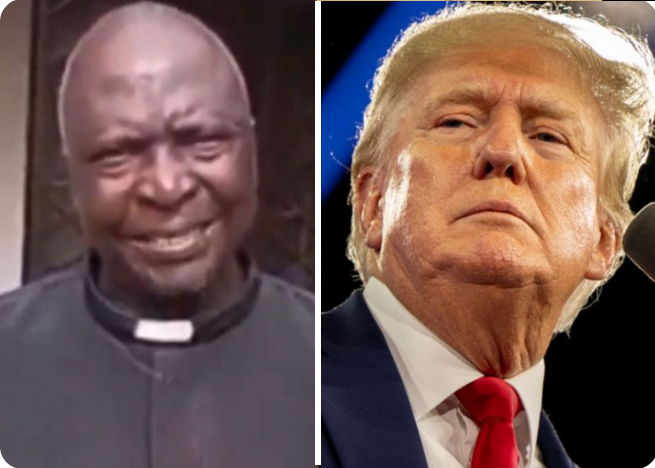
Speaking with visible emotion and moral gravity, the witness Pastor Ezekiel Dachomo recounted personal loss, first-hand exposure to mass atrocities, and a deliberate effort to erase Christian presence from ancestral lands through killings, displacement, and forced renaming of communities.
“I have lost my brethren, my blood relatives, and even my best friend,” he said. “I have cried with the bereaved. I have endured the trauma caused by the gory sight of charred human corpses. I have comforted widows and orphans, and even yesterday I was with widows.”
Pastor Dachomo’s testimony underscored not only personal grief, but a sustained pattern of trauma and devastation affecting entire communities.
According to his account, Christian villages have been attacked, burned, and emptied, with churches, schools, and health facilities destroyed.
An Intersociety report, referenced by U.S. Congressman Chris Smith, stated that over 5 million Christians had been forced into IDP camps due to violence since 2009. Other figures from reports cited by lawmakers suggest total displacement reaching 10 million by mid-2025.
Pastor Dachomo described walking through razed Christian settlements with hope that internally displaced persons would one day return, only to later discover that the same villages had been reoccupied by the Fulani Islamic invaders.
In some cases, he stated, the Islamic invaders rebuilt structures and renamed the Christian communities.
“I have walked through burnt villages, health services, and burnt churches with faith that the Internally Displaced Persons (IDPs) will return home, only for the killer invaders to thereafter occupy those villages, and rebuild some.
Google Maps shows how new the roofs of the occupied villages shine in the sun. This is what is happening.”
Pastor Dachomo firmly rejected the characterization of the violence as a communal clash or a dispute between farmers and herders.
“What I have seen is not a communal conflict,” he stated. “It is not a clash between farmers and herders. It is a systematic, organized campaign to wipe out Christians from their ancestral land. This information is obtained through fact finding missions.”
The objectives were described as extermination, land grabbing, and religious cleansing, with attacks followed by occupation and normalization by the Nigerian government.
“The aim is to completely erase the Christian presence from the central land as the names of villages are being changed by the invaders, jihadists, after this attack. Something that never happened even in the former Sudan.”
Particularly troubling allegations included the assassination of pastors, the burning of churches and Christian schools, and the forced marriages of the girls, most of them underaged, with reference made to the abduction of the Chibok schoolgirls in Borno State as an emblematic case.
Pastor Dachomo further explained that during the previous administration of late Mohammadu Buhari, a government project was sited in a renamed Christian village that had been taken over by Islamists following such attacks, raising serious questions about state accountability, government complicity, and the restoration of displaced communities to their ancestral lands.
“Our villages are being emptied, renamed, and occupied by those who kill us, and the government is doing nothing about it, to restore us back to the land of our fathers.”
During his testimony, he also criticized the widespread silence among prominent Islamic institutions and leaders.
According to him, no major Islamic radio stations or recognized bodies, including national councils, emirs, sultans, or clerics, had publicly condemned the violence.
He further stated that some Muslims tried to shift attention to themselves only after Christian voices became loud, bringing international attention to the ongoing genocide.
Recall that the Nigerian government’s response to the allegation of Christian genocide is that Muslims are also victims, an attempt to cancel the ongoing killings as Christian genocide.
While Pastor Dachomo did not deny that some moderate non-Fulani Muslims may have also suffered insecurity, Pastor Dachomo argued that the scale and systematic nature of killings in predominantly Christian areas set these attacks apart.
“This is genocide from the bottom of my heart,” he said. “We are being killed because we are Christians. Our villages are being emptied, renamed, and occupied, and the government is doing nothing to restore us to the land of our fathers’.
During the last administration, a federal government project was cited in one of such villages with this name the invaders gave the village after renaming it.”
The central aim of the press conference, he explained, was “to call for immediate international intervention and hold perpetrators accountable”.
Nigeria, as a signatory to the International Convention on the Prevention and Punishment of the Crime of Genocide, he said, bear a clear legal obligation to prevent and stop such crimes.
“Nigeria is a signatory to the International Convention on genocide. Even if Nigeria was not a signatory, customary international law places a burden on Nigeria to prevent and stop this genocide and even to invite the international community to help it.”
Citing shared human values, Pastor Dachomo urged the global community not to look away. “The world cannot look away,” he concluded, calling for coordinated international action, including collaboration with the United States, to investigate the allegations, protect vulnerable populations, and ensure justice for victims.
Long before the latest eyewitness testimonies and press conferences describing the genocide against Christian communities in Nigeria, calls for United States intervention had already been echoing across Nigerian civil society, diaspora groups, faith-based organizations, and from ordinary Nigerians.
These appeals emerged from years of sustained Fulani insecurity, mass displacement, and the inability or unwillingness of the Nigerian state to protect vulnerable populations.
Across social media platforms, advocacy letters, congressional briefings, and public demonstrations in Washington, London, and other global capitals, Nigerians urged the United States to take a firmer stance against unchecked terrorism and targeted killings.
Many of these calls intensified following repeated attacks on rural communities, churches, and schools, with advocates arguing that international pressure and, if necessary, military intervention were essential to halt the violence and deter further atrocities.
This backdrop gives particular significance to remarks by the U.S. President Donald Trump, who, issued stark warnings to terrorist groups operating in Nigeria.
Trump posted on Social media vowing the “annihilation” of terrorists, language that resonated powerfully among Nigerians who felt abandoned by global institutions.
To Nigerians, the statement signaled moral clarity and resolve; to critics, it reflected the blunt realism of counterterrorism policy in a region long plagued by insurgency.
Those words took on concrete meaning on December 25, when the United States carried out an air strike targeting terrorist elements in Sokoto State identified by the U.S. government as members of ISIS.
Trump described the operation as a “Christmas Day gift.” For many affected communities and their advocates, the strike was interpreted as a long-awaited acknowledgment that the threat emanating from Nigeria’s terror networks had crossed a threshold demanding decisive international action.
Supporters of the operation argued that the Christmas Day strike underscored what Nigerian authorities had struggled to confront domestically: that certain terror enclaves had grown entrenched, sophisticated, and lethal, requiring external military capacity to disrupt them.
In this sense, the air strike was seen as validation of years of warnings from local leaders, clergy, and civil society actors who had insisted that the persecution of Christians was neither exaggerated nor purely internal.
In contrast, the Nigerian government has consistently rejected allegations that genocide is taking place within its borders.
Official statements have framed the violence as complex security challenges rooted in banditry, terrorism, and resource-related conflicts, rather than as a systematic campaign targeting any religious or ethnic group.
Government representatives have repeatedly stood against what they describe as inflammatory language, claiming that such characterizations risk undermining national unity and overstating the facts on the ground.
Abuja has also argued that acknowledging genocide would imply intent and coordination at a level it denies exists, claiming that the violence, does not meet the legal threshold under international law.
However, critics counter that denial itself has become part of the problem. They argue that dismissing genocide allegations without transparent, independent investigations deepens mistrust and fuels perceptions of impunity.
To these voices, the contrast between official reassurances and on-the-ground realities, including mass displacement, destroyed communities, and prolonged occupation of seized lands, is too stark to ignore.
The convergence of earlier Nigerian calls for U.S. intervention, Trump’s explicit warnings about annihilating terrorists, and the December 25 air strike in Sokoto has thus reshaped the international conversation.
What was once treated largely as a domestic security crisis is increasingly viewed through the lens of international responsibility, counterterrorism cooperation, and crimes under international law.
The testimony of Pastor Ezekiel Dachomo intensifies scrutiny on the role of the international community in preventing mass atrocities, and adds to mounting demands that the crisis be addressed not as localized unrest, but as crime of international concern.
Related News:
