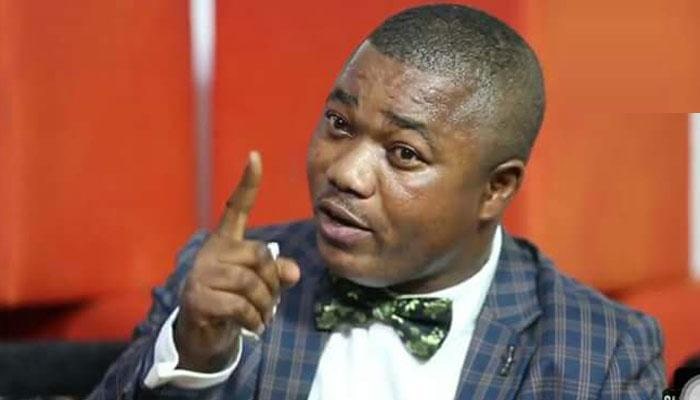
Ejiofor Slams Release of 70 Terror Suspects, Warns of “Inversion of justice, morality, and state authority”
"A government that elects to negotiate with terror, reward violence with legitimacy, and substitute justice with expediency is not brokering peace; it is institutionalising insecurity"
Abuja, Nigeria – January 15, 2026
Prominent human rights lawyer and constitutional advocate, Barrister Ifeanyi Ejiofor, has delivered a scathing indictment of Nigeria’s security and justice architecture following the controversial release of 70 suspected Fulani bandits and jihadist terrorists by the Katsina State Government, despite widespread public outrage and rejection by Nigerians.
In a strongly worded social media post titled “When Terrorists Are Negotiated With and the Innocent Are Imprisoned,” Ejiofor described the development as a tragic inversion of justice, morality, and state authority, warning that Nigeria has long slide into a perilous era where violence is rewarded and innocence is punished.
According to Ejiofor, the decision to release the suspects under the banner of a so-called “peace accord” is not only reckless but deeply destabilising, especially at a time when Fulani terrorist attacks against civilians, particularly Christians in the North, are on the rise.
“The recent release of seventy (70) confirmed bandits and jihadist terrorists by the Katsina State Government, under the euphemistic cloak of a so-called ‘peace accord,’ ought to send cold shivers down the spine of every conscientious Nigerian.”
Ejiofor noted that “This development is not merely troubling; it is an ominous signal of a perilous policy trajectory, one that, if unchecked, is capable of igniting the entire Northern region and, by extension, imperilling the already fragile stability of the Nigerian state.”
He warned that negotiating with Fulani terrorists from a position of weakness sends a dangerous signal that bloodshed and lawlessness have become legitimate tools for engaging the Nigerian state.
“A government that elects to negotiate with terror, reward violence with legitimacy, and substitute justice with expediency is not brokering peace; it is institutionalising insecurity.”
“The message is unmistakable,” Ejiofor wrote. “Arms, bloodshed, and lawlessness have now become viable bargaining instruments in dealings with the Nigerian state.”
Questions for the Federal Government
Ejiofor questioned whether the Katsina State Government’s actions enjoy the tacit approval of the Federal Government and national security agencies, noting that the absence of a clear and firm repudiation from Abuja raises troubling concerns.
He insisted that Nigerians deserve more than vague reassurances, calling for a candid, constitutionally grounded explanation from the Federal Government.
He warned that silence at the federal level risks lending credibility to the perception that official backing hovers over the reckless and dangerous policy direction.
Freedom for Terror Suspects, Detention for the Innocent
Drawing a sharp contrast, Ejiofor lamented what he described as the cruel irony of Nigeria’s security approach: while suspected Fulani terrorists are released and reintegrated, thousands of innocent Igbo youths, women, and elderly citizens remain unlawfully detained across the country without trial.
He cited the confirmed death of Mrs. Calista Ifedi in detention at the notorious Wawa Military Barracks in Niger State as a tragic symbol of this injustice.
Mrs. Ifedi, illegally arrested in November 2021 alongside her husband on the unproven allegation of selling food to persons labelled as IPOB members, was never charged or arraigned before any court of law before her death in custody.
Ejiofor traced such abuses to policies implemented during the administration of the late President Muhammadu Buhari, stating that unlawful detentions were carried out with the endorsement of key figures in the security and justice sectors at the time.
He noted that it was only through recent reforms by the current Director-General of the Department of State Services, Mr. Tosin A. Ajayi, that some detainees, including Mr. Ifedi, were eventually released. Tragically, Mr. Ifedi reportedly learned only days ago that his wife had died while in detention.
For years, Ejiofor said he has raised alarms over the fate of hundreds of innocent Igbo citizens held at facilities such as Wawa Barracks and Kainji in Niger State, subjected to secretive processes that mock the rule of law and constitutional democracy.
https://x.com/EjioforBar/status/2011323476024398042?s=20
Silence of Political Leaders
The advocate also criticised political leaders from the South-East, accusing them of prioritising 2027 electoral calculations over the immediate suffering of their unlawfully detained constituents.
He described their silence as complicity, particularly at a time when, the real architects and sponsors of terror are being rewarded with negotiations, handshakes, and freedom.
Ejiofor called on South-East governors and Igbo political leaders to urgently investigate the continued detention of innocent citizens and to demand accountability from the relevant security agencies.
He stressed that where culpability exists, prosecution must follow through open and transparent trials, warning that anything less amounts to executive lawlessness disguised as security policy.
A State on the Brink
Beyond the immediate outrage, Ejiofor warned of grave national implications. He argued that a state that negotiates with terrorists from a posture of fear is effectively surrendering its sovereignty and conceding control to violent non-state actors. History, he cautioned, shows that appeasement does not extinguish terror but emboldens it.
Most alarming, he noted, are reports suggesting that further negotiations may be underway for the release of additional incarcerated terrorists. Using a chilling Igbo proverb, he warned that Nigeria is rapidly approaching a point of no return.
“Nigeria today sits precariously on a keg of gunpowder,” Ejiofor warned, cautioning that unless the Federal Government urgently halts this trajectory, entire regions of the country risk being ceded, piece by piece, to Fulani jihadist terror.
As public anger continues to swell over the Katsina release, Ejiofor’s intervention has reignited national debate over justice, security, and the future of the Nigerian state, with many Nigerians now asking whether the country is truly fighting terror or negotiating its own unraveling.

Related Articles
Sowore Demands Accountability as DSS Admits Mrs. Ifedi Died in Illegal Detention
Torture, Starvation and Disappearances at Imo Police ‘Tiger Base’, Another Eyewitness Account
