Death Sentence for Self-Defense Exposes Why Nigeria Is a Failed State
Kaduna, Nigeria – A controversial death sentence handed down in Kaduna State has ignited renewed outrage over justice, self-defense rights, and the rule of law in Nigeria, particularly in regions long besieged by terrorist attacks against Christians.
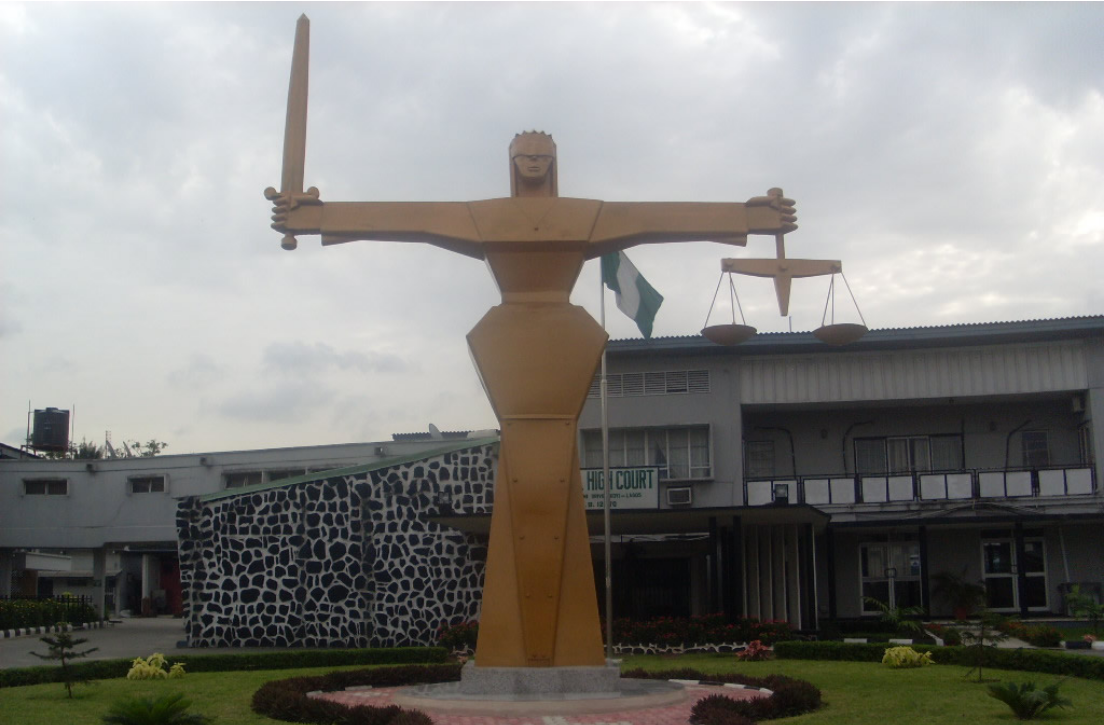
A Kaduna State High Court has sentenced a man popularly known as Zidane (real name Victor Solomon) to death by hanging on a murder conviction linked to community defense operations in Southern Kaduna.
Supporters and civil rights advocates describe the ruling as a glaring miscarriage of justice and part of a familiar pattern, raising grave concerns about fairness, double jeopardy, and judicial independence in Nigeria.
Zidane, an ethnic Adara youth from Kasuwan Magani in Kajuru Local Government Area, rose to local prominence amid waves of deadly attacks by Fulani terrorist groups on predominantly Christian communities in Southern Kaduna.
Nigeria has spent more than a decade battling what many describe as an ongoing jihad by Fulani Islamist groups. In the northeast, Boko Haram and its offshoot ISWAP have killed tens of thousands and displaced millions. Across other regions of the country, heavily armed Fulani terror groups, mass kidnappings, and coordinated raids on Christian villages have become routine.
Locals credit Zidane with organizing neighborhood defense efforts after repeated assaults by well-armed attackers that left families displaced and traumatized. For residents, he symbolized something rare in Nigeria’s conflict zones: the ability to sleep at night without fear.
According to community sources and human rights lawyers, authorities arrested Zidane in 2020. He was initially detained by the Nigerian Army before being transferred to police custody in Kaduna.
Legal proceedings dragged on for several years. Reports indicate that Zidane was acquitted by one state high court on similar charges, only to be retried, convicted, and sentenced to death by another court.
This sequence has provoked widespread condemnation from human rights groups, legal analysts, and community leaders.

One critic described the ruling as “not merely a local court decision, but a case study in how terrorism and politicized justice now reinforce one another, defining state failure in Africa’s most populous country.”
One of the most troubling aspects of the case is the contradiction between two court rulings on the same charges. By international legal standards, this alone is deeply alarming. In a failed state like Nigeria, however, it has become tragically familiar.
Legal commentators note that common-law principles, including protections against double jeopardy, exist precisely to prevent individuals from being tried twice for the same offense. Yet in Zidane’s case, one court declared him innocent while another imposed the ultimate punishment for the same conduct.
Human rights advocates argue that this inconsistency exposes entrenched flaws within Nigeria’s justice system, including unequal access to fair trials and deep susceptibility to political influence, especially in cases involving security and community self-defense.
Southern Kaduna has been a flashpoint of Christian genocide for over a decade. Many residents believe successive state and federal governments have willfully failed to protect Christian communities, breeding resentment and deep mistrust.
This climate of terror has given rise to localized self-defense efforts by villagers who believe formal security forces are indifferent to their suffering. Over time, many communities concluded that survival depended not on the state, but on themselves. It is within this vacuum that figures like Joshua “Zidane” Kajuru emerged.
Despite Nigeria’s vast military budget and repeated government assurances, Christian communities remain exposed. Attacks are often followed by silence, delayed or nonexistent security responses, and mass burials rather than arrests.
The case of Sunday Jackson, who narrowly escaped execution after international intervention, stands alongside Zidane’s sentencing as part of a chilling pattern in which Nigeria’s judiciary is weaponized against Christians whose only offense is refusing to die quietly.
In both cases, self-defense was reframed as criminality, while the context of sustained attacks on Christian communities was erased from courtroom narratives, as if survival itself were illegal.
By criminalizing self-defense and normalizing death sentences for Christians who resist annihilation, Nigeria’s institutions increasingly function less as neutral arbiters of justice and more as administrative instruments in a slow, bureaucratized genocide.
The violence in Nigeria is fundamentally about faith. Christian communities across the country have long accused authorities of failing to protect them while aggressively prosecuting those who defend themselves. Meanwhile, armed groups responsible for mass killings frequently evade justice altogether. Arrests are non-existent. Convictions are rarer still.
This is not the behavior of a state merely overwhelmed by insecurity. It is the signature of a system that enables it. When courts punish vulnerable Christian communities while violent actors remain untouched, the state crosses a fatal threshold. In such moments, Nigeria reveals itself to the world not only as failed, but as complicit.
Whether or not every allegation surrounding this case is accepted in full, the pattern is unmistakable. When courts act more decisively against community defenders than against mass killers, legitimacy collapses.
The message sent by Zidane’s death sentence is chillingly clear: if the state fails to protect you, and you protect yourself, the state will kill you for it.
This is not how functioning states behave. A functioning state monopolizes violence and provides security. Nigeria increasingly does neither. Instead, it criminalizes self-defense while outsourcing insecurity to chance, politics, and silence.
Nigeria is not a peripheral nation. It is Africa’s most populous country, a major oil producer, and a key Western ally often described as a regional security anchor. Meanwhile, Nigeria cannot contain insecurity. It spills across borders through migration, terrorism, and organized crime.
Global leaders like the United Kingdom who prioritize perceived “stability” over justice often discover too late that injustice itself is destabilizing, as such Nigeria has been able to get away with legitimizing injustice for a long time.
Lovers of peace worldwide must bear in mind that states are considered failed not only when they collapse, but when they consistently fail to perform their most basic duties: protecting life, administering justice fairly, and maintaining public trust.
The sentencing of a community defender to death, while mass killers roam free, exposes Nigeria’s crisis in its rawest form. Courts exist. Uniforms exist. Institutions exist. What is missing is legitimacy.
Until Nigeria confronts the realities of failed justice, ethno-religious bias, and systematic security abandonment, cases like this will continue to multiply. With each one, the distance between Nigeria and the idea of a functioning state grows wider.
For the people of Kaduna, this is not theory. It is a death sentence.
Sunday Jackson Granted Clemency Following International Outrage and Intervention
