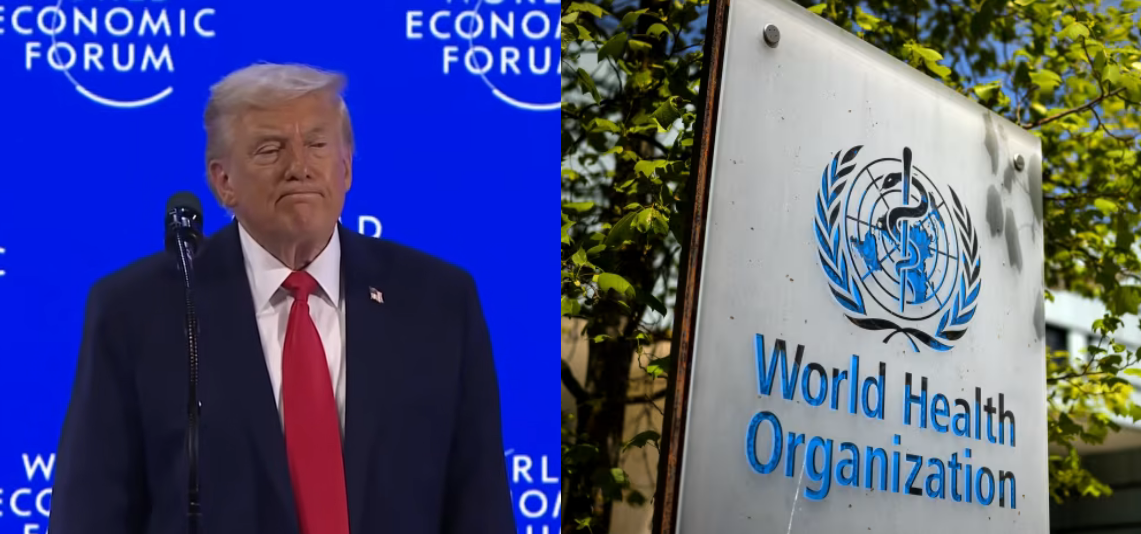
CUTTING TIES: U.S. Moves to Exit World Health Organization
Washington, D.C. – January 23, 2026
The United States has formally withdrawn from the World Health Organization (WHO), following through on President Donald Trump’s long-standing decision to sever ties with the global health body over its handling of the COVID-19 pandemic and what Washington describes as the organization’s proximity to China.
On the first day of his presidency in 2025, President Trump gave notice, via an executive order that the U.S. would quit the organization. Under U.S. law, it was supposed to give one-year notice before departing.
The move marks a significant shift in U.S. engagement with multilateral health governance and revives criticisms first raised during the height of the pandemic, when the Trump administration accused the WHO of failing to act independently and transparently in the early stages of the outbreak.
U.S. officials argue that the organization’s conduct during COVID-19 undermined global trust, failure to adopt urgently needed reforms and compromised international health security due to its inability to demonstrate independence from the inappropriate political influence of WHO member states, allegations the WHO has consistently denied.
In a document released on Thursday, the Department of Health and Human Services said that the government had ended its funding contributions to the agency.
It indicated the pausing of any future transfer of any U.S. government resources to the WHO by President Trump citing that the organization had cost the U.S. trillions of dollars.
According to witnesses, the U.S. flag had been removed from outside the WHO headquarters in Geneva on Thursday with the WHO accusing the U.S. of not paying the fees it owes for 2024 and 2025.
The U.S. has historically been the largest funder to the WHO, through both its assessed and voluntary contributions. Therefore, the withdrawal of the United States has sparked a financial crisis that has seen the WHO cut its management team in half and cutting budgets across the agency.
According to the U.S. Department of Health and Human Services, the U.S. on average pays $111 million a year in member dues to the WHO and roughly $570 million more in annual voluntary contributions
The withdrawal places the United States outside the world’s primary coordinating body for global disease surveillance and response, a position that has drawn mixed reactions from international partners and public health experts.
Supporters of the decision say it restores U.S. sovereignty in health policy and sends a warning to international institutions perceived as politically compromised.
Critics, however, warn that disengagement could weaken global cooperation during future pandemics and reduce American influence in shaping international health standards.
The development reopens a wider debate about the role of global institutions, accountability in crisis management, and the growing intersection of geopolitics and public health.
