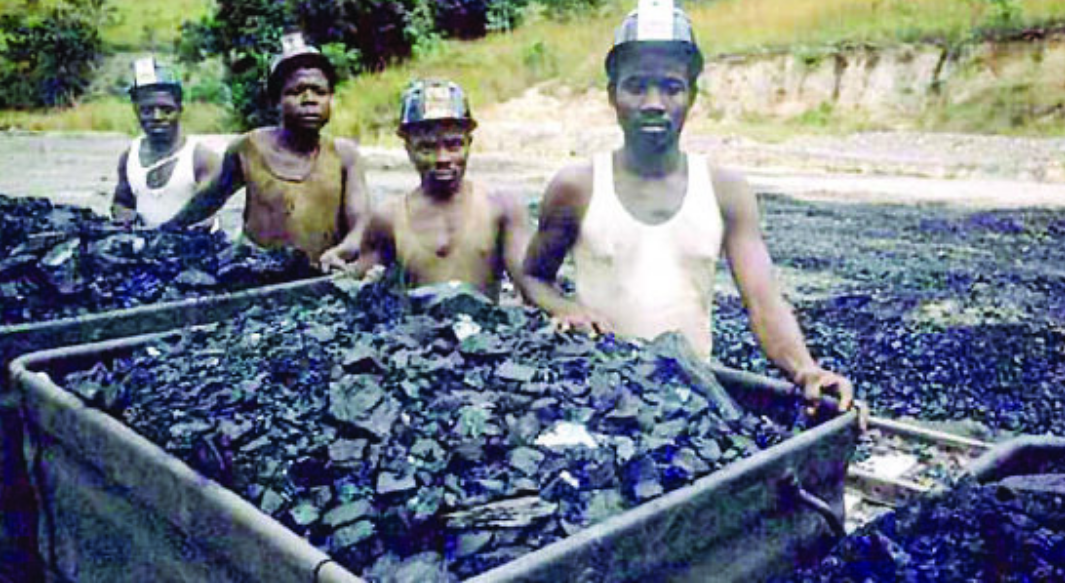
Court Orders UK to Pay £20m Each to Families of 1949 Coal Miners
In a landmark judgment that reopens one of Nigeria’s darkest colonial chapters, the High Court sitting in Enugu has ordered the British government to pay £20 million in compensation to each family of the 21 coal miners brutally killed in 1949.
The case, filed as Suit No: E/909/2024, was instituted by human rights activist, Mazi Greg Onoh, who asked the court to compel the British Government to accept responsibility for the killings, issue a formal apology, and pay full compensation to the families of the deceased miners.
Listed as respondents in the suit were the Secretary of State for Foreign, Commonwealth and Development Affairs; the British Government; the Federal Government of Nigeria; as well as the Attorney-General of the Federation and the Head of the Commonwealth, Government of the United Kingdom.
Justice Anthony Onovo, delivering the ruling on Thursday at the Enugu Division of the court, held that the killings carried out by British colonial authorities amounted to a grave violation of human rights and could not be shielded by the passage of time.
The court described the massacre, which occurred at the Iva Valley coal mine, as a “deliberate and unjustifiable use of lethal force” against unarmed Nigerian workers who were peacefully protesting poor working conditions and unfair labour practices.
According to the judgment, historical evidence presented before the court showed that colonial police opened fire on the miners without lawful provocation, killing 21 on the spot and leaving many others injured.
Justice Onovo ruled that the British government, as the legal successor to the colonial administration, bears responsibility for the actions of its officers, and orders substantial compensation, formal apologies, and diplomatic action.
“This defenceless coal miners were asking for improved work conditions, they were not embarking on any violent action against the authorities, but yet were shot and killed.
‘”The 1st, 2nd, 5th and 6th respondents should pay £20 million per victim, totaling £420 million, payable by the British Government as effective remedy and compensation for the violations of the right to life.
“They will also pay post-judgment interest at 10 per cent annum until fully paid while claims for pre-judgment interest and exemplary damages is whereby refused,” Mr Onovo held.
“The lives lost in 1949 were Nigerian lives taken unlawfully by agents of the British Crown,” the judge stated. “Justice may be delayed, but it must not be denied.”
He ordered that £20 million be paid to each affected family as reparations for the loss of life, trauma, and decades of suffering.
Justice Onovo further directed that unreserved written apologies be issued to the families through their legal representatives and published in national dailies including Daily Sun, Daily Independent and The PUNCH, as well as in three leading newspapers in the United Kingdom, in recognition of the historic injustice.
The court ordered that evidence of such publications must be filed within 60 days, while the financial compensation should be fully paid within 90 days from the date of the judgment.
The judge also faulted the Federal Government of Nigeria and the Attorney-General of the Federation, noting that under Sections 19(d) and 150(1) of the Constitution, they had a duty to seek redress on behalf of the victims. Their prolonged failure to act, he held, amounted to a dereliction of constitutional responsibility.
He further mandated the Nigerian government to commence diplomatic engagement with the British authorities within 60 days to pursue justice, effective remedies and reparations for the families.
Justice Onovo dismissed a preliminary objection anchored on sovereign immunity, affirming that the court had the jurisdiction to hear the matter. He stressed that grave historical wrongs remain justiciable under Nigeria’s Constitution.
Rejecting arguments that Nigeria’s colonial status at the time of the killings barred legal action, the judge ruled: “The contention by the representative of the Federal Government that Nigeria was still under colonial rule when the killings occurred is hereby struck out.”
The 1949 Enugu coal miners’ massacre remains one of the most symbolic moments of resistance against colonial oppression in Nigeria’s history.
The miners were protesting against harsh working conditions, racial inequalities in wages and unpaid back wages, but their demands were ignored, leading them to adopted a “go-slow” protest style and occupied the mine to prevent management from locking them out.
The British superintendent reacted by opening fire on the peaceful protesters, killing 21 coal miners and injuring 51 others.
According to Peoples Gazette, the victims were Sunday Anyasodo, Ani Oha, Andrew J. Obiekwe Okonkwo, Augustine Chiwetalu, Onoh Ugwu, Ngwu Offor, Ndunguba Eze, Okafor Agu, Livinus Ukachunwa, Jonathan Agu Ozoani, Moses Ikegbu Okoloha and Chukwu Ugwu.
Others include Thomas Chukwu, Simon Nwachukwu, Agu Alo, Ogbonnia Ani Chima, Nnaji Nwachukwu, William Nwaku, James Onoh Ekeowa, Felix Nnaji, and Ani Nwaekwe.
The killings sparked nationwide outrage at the time and intensified the push for independence.
Legal representatives of the families hailed the ruling as a historic victory.
Reacting to the judgment, counsel to the applicants, Prof. Yemi Akinseye-George, SAN, alongside P. N. Agazie, described the ruling as historic and a clear message that no government should tolerate abuses, torture, or the unlawful taking of human lives.
“This judgment restores dignity to the victims and their descendants, it sends a clear message that colonial crimes cannot be buried by time.”
They noted that the court drew persuasive parallels with global precedents, including the United Kingdom’s settlement with victims of the Mau Mau uprising, reinforcing the continuing obligation of states to provide redress for serious human rights violations.
“This judgment marks a major milestone in the quest for historical accountability,” Prof. Akinseye-George said. “It affirms that the right to life transcends time, borders, and changes in sovereignty.”
Supporters who gathered around the court premises erupted in cheers, some holding photographs of the fallen miners, others chanting solidarity songs.
Like echoes from a long-silenced mine shaft, the voices of the 1949 victims have finally reached the chambers of justice, nearly eight decades later.
Source: https://gazettengr.com/court-orders-british-govt-to-pay-420-million-to-families-of-21-enugu-coal-miners-killed-by-colonial-masters/
