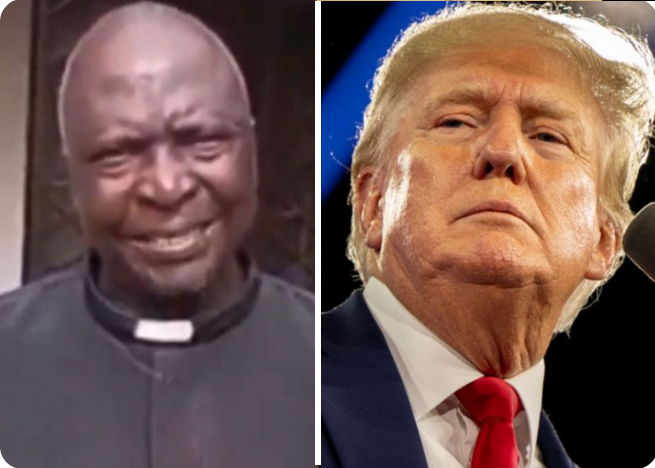
“Come quickly before they finish us” – Rev. Ezekiel Dachomo Issues Urgent Plea to Donald Trump as Christian Killings Intensify
Abuja, Nigeria – December 12, 2025
In a desperate and emotionally charged appeal, Rev. Ezekiel Dachomo has called on U.S. President Donald J. Trump to intervene in the unfolding genocide against Christians in Nigeria.
Speaking in a widely circulated video, Dachomo warned that delay could cost him his own voice and the lives of many more Nigerians.
“My message to President Donald Trump is, please don’t relent. Come quickly before they finish us,” he said.
“If you delay, you will not hear my voice anymore because these people have finished with my Facebook account; they blocked it. Come quickly. You are not going to save us alone as Christians; my fellow brothers, Muslims are also in pain. Save Nigeria.”
Dachomo’s plea is the culmination of years of frontline advocacy for an end to the ongoing Christian genocide in Nigeria.
He became a prominent figure after releasing raw documentary footage of mass burials following repeated attacks across Plateau State. His recordings, many showing long trenches filled with victims, helped force global attention onto a crisis often minimized in official narratives.
According to him, he has personally overseen more than 70 mass burials, some involving over five hundreds of bodies at once, largely composed of women, children and displaced villagers targeted in Fulani terrorist raids.
The cleric’s growing alarm reflects a worsening situation. Communities in north-central Nigeria continue to endure waves of violence linked to Fulani Terrorist groups.
Advocacy organizations have long warned of escalating patterns of religious cleansing, affecting Christian communities with moderate Muslims also. The excuse the terrorists offer for killing fellow Muslims is that they not in support of the jihad, and therefore not Muslim enough.
Dachomo like most Nigerians insists that what is happening “meets every definition of genocide,” pointing to the scale, frequency and organized nature of the killings targeted at primarily Christians.
His decision to reach out directly to the U.S. president underscores a deep frustration with Nigeria’s security architecture and with what Nigerians sees as the international community’s silence.
Trump, for his part, has recently expressed readiness to “annihilate” terrorist networks in Nigeria if the Nigerian government continues with their excuses. His statements have fueled debate about foreign intervention, sovereignty, and the global responsibility to act where mass atrocities are alleged.
As Rev. Dachomo’s message continues to circulate, it encapsulates the desperation of communities caught between state inaction and relentless violence.
His warning, that his voice may soon be silenced, is not just personal. It echoes the fear of countless families who feel unseen, unprotected and abandoned in the face of escalating brutality.
Whether the international response shifts in the wake of this appeal remains to be seen, but the urgency needed is unmistakable.
