China Executes Former Huarong Executive Bai Tianhui Over Massive Bribery
Beijing, China – December 9, 2025
China on Tuesday executed Bai Tianhui, the former general manager of China Huarong International Holdings (CHIH), after he was convicted of accepting massive bribes – a culmination of the country’s unrelenting crackdown on financial-sector corruption.
Between 2014 and 2018, prosecutors found that Bai, holding various senior roles at Huarong, from capital operations director to general manager, used his authority to steer corporate financing and project acquisitions in favour of certain parties, in return for bribes.
The total value of bribes was reckoned at more than 1.108 billion yuan (roughly US$156 million).
According to the verdict, the scale of his offence, both in monetary value and effect, was “exceptionally serious.” The crime inflicted “particularly heavy losses” on state interests, and its social impact was described as “especially egregious.”
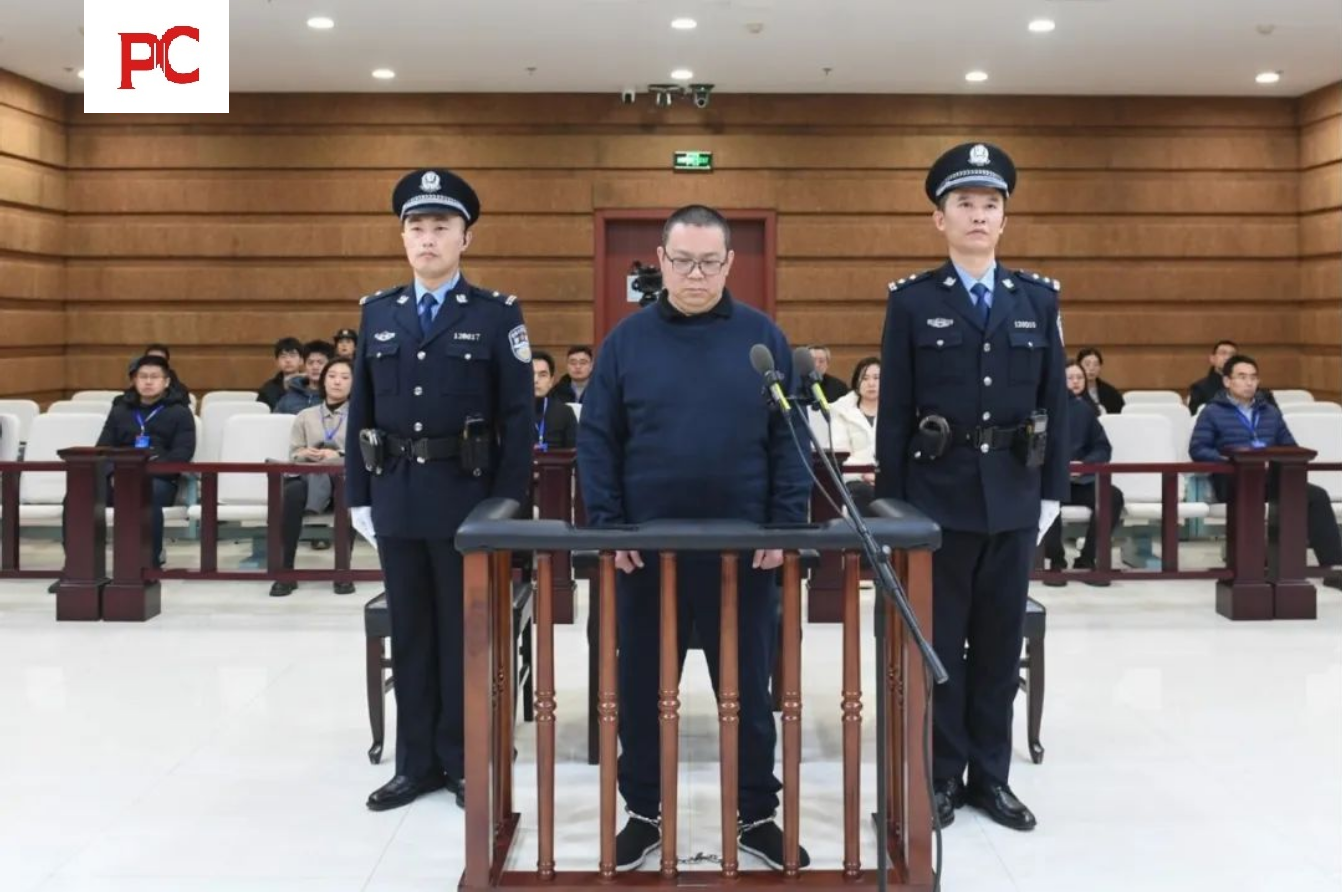
On May 28, 2024, the Tianjin No. 2 Intermediate People’s Court sentenced Bai to death, deprived him of political rights for life, confiscated his personal assets, and ordered recovery of illicit gains.
Bai appealed, but on February 24, 2025, the Tianjin High People’s Court rejected the appeal and upheld the original verdict.
The case was then submitted for mandatory review by Supreme People’s Court (SPC), which confirmed the sentence.
On Tuesday morning, December 9, 2025, the death sentence was carried out in Tianjin. Bai was allowed a final meeting with close relatives before execution, as reported by state media.
Huarong, a state-controlled asset management conglomerate originally created to manage bad debt, has become emblematic of China’s intensified scrutiny of its financial sector. CHIH is one of several Huarong-linked entities whose executives have come under investigation.
Bai is not the first senior Huarong figure to face capital punishment. In 2021, Lai Xiaomin, former chairman of the broader Huarong group, was executed after being convicted of receiving bribes worth over 1.78 billion yuan, among other offences.
Observers note that under Xi Jinping’s long-running anti-corruption campaign, the financial industry has become a prime target, as another high-ranking banker was recently executed while others face varying degrees of penalties.
China’s leadership appears intent on sending a strong message: even high-ranking executives in major state-owned financial firms are not immune to the harshest punishment. In this sense, the execution of Bai Tianhui bolsters the deterrence power of the anti-corruption campaign.
Yet the severity of the sentence, immediate execution, without reprieve, raises concerns among international observers and human-rights groups. The country’s statistics on capital punishment remain secret, but this high-profile crackdown highlights that corruption in strategic sectors, especially finance, can lead to the death penalty.
The case also casts a long shadow on corporate governance and state-firm oversight in China, adding pressure on remaining executives, and signalling tighter control in sectors critical to national economic stability.
