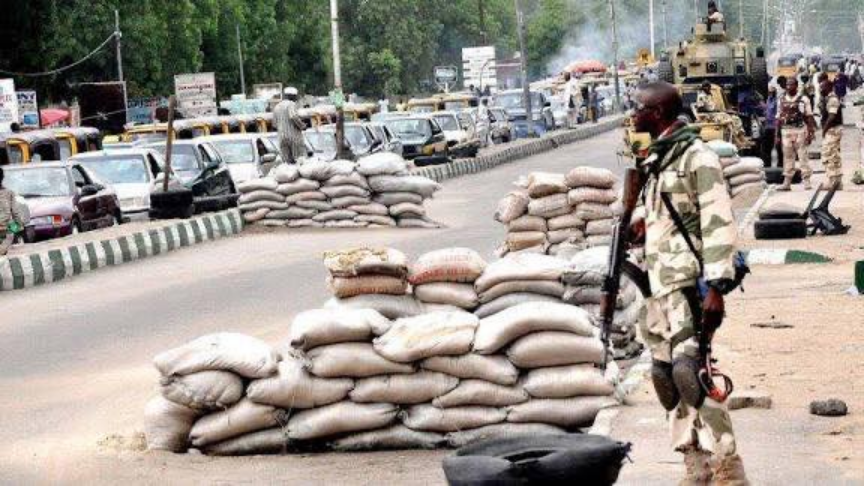
Breaking: Nigeria’s Defence Headquarters Orders Nationwide Removal of Non-Essential Roadblocks
Abuja, Nigeria – December 11, 2025
The Nigerian Defence Headquarters (DHQ) has ordered the immediate dismantling of non-essential roadblocks and unauthorised checkpoints nationwide, to streamline security operations and ease movement across the country.
The directive, issued via an internal memo on December 5 and signed by Brigadier General A. Rabiu “for CDS,” expressed concern over the normalized and “growing proliferation of non-essential static roadblocks and checkpoints along several routes within the JOA.”
According to the memo, the unchecked spread of unapproved checkpoints has continued to “undermine operational efficiency,” disrupt the freedom of movement of civilians and security personnel, and expose troops to unnecessary danger.
Particular focus was placed on major national highways that serve as critical arteries for commerce and travel. Routes named in the directive include, among others, Abuja-Lokoja-Ajaokuta-Idah-Otukpa-Obollo Afor-Enugu; Abuja-Kaduna-Kano; and Lagos-Ore-Benin-Asaba-Niger Bridge.
The DHQ requests that all static, non-essential roadblocks and unauthorised checkpoints are to be dismantled immediately.
Security commanders at various jurisdictions have been instructed to maintain only essential control points previously approved.
In place of static posts, the DHQ emphasized a shift toward “heightened mobility and intelligence-driven operations,” including increased mobile patrols and human-intelligence gathering.
While responding to questions during his Senate screening in early December 2025, the newly appointed Chief of Defence Staff, Christopher Musa, announced plans to withdraw soldiers from routine road checkpoints and replace them with personnel of the Nigeria Security and Civil Defence Corps (NSCDC).
He explained that troops would instead be redeployed to frontline operations to confront Fulani terrorists directly.
This decision is framed as refocusing the military’s resources, from the failed static policing and road-control tasks to more dynamic, intelligence-led operations in conflict and crime-affected zones.
For many Nigerians, especially travellers and transporters, the removal of redundant roadblocks will offer immediate relief: fewer delays, lower risk of extortion or harassment, and smoother flow of goods and commodities.
For security forces, the shift may improve agility and favour proactive rather than reactive deployment.
However, the success of this order hinges on effective enforcement, both in dismantling existing checkpoints and implementing mobile, intelligence-driven alternatives.
Observers note that without consistent follow-through, there is a risk that unauthorised checkpoints could simply re-emerge under different guises.
Critics note that the Nigerian Army has long faced allegations of indiscipline, including accusations from within its own ranks of sexual misconduct, and collaboration with Fulani terrorists, with little visible corrective action.
Members of the public have also accused soldiers of extortion and collaborating with armed Fulani terrorist groups, pointing that certain checkpoints have been used as cover during ransom collections and for holding victims.
The move sends a signal: that the military intends to recalibrate its role in internal security toward more strategic engagement, rather than static control.
