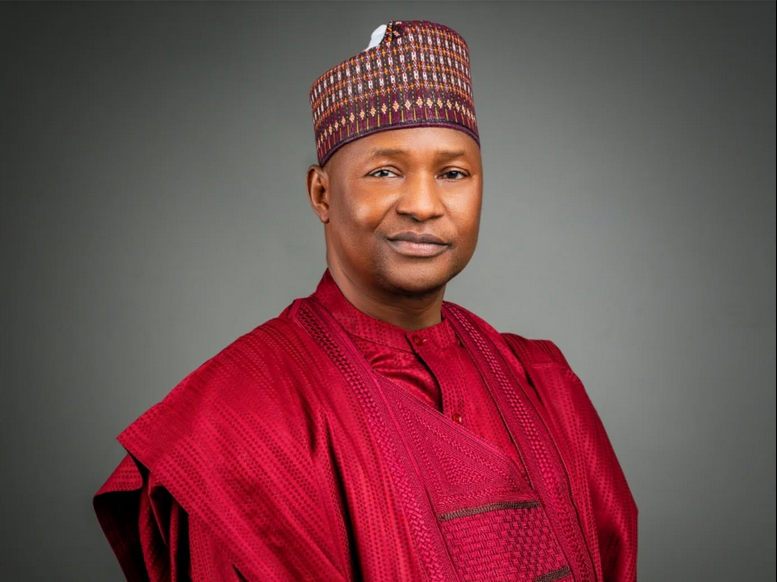
BREAKING: Judge Withdraws from ₦212bn EFCC Case Against Ex-AGF Malami
Abuja, Nigeria – In a dramatic turn in one of Nigeria’s high-profile anti-graft prosecutions, Justice Obiora Egwuatu of the Federal High Court in Abuja has withdrawn from presiding over two Economic and Financial Crimes Commission (EFCC) cases against Mr. Abubakar Malami, SAN, the immediate past Attorney-General of the Federation and Minister of Justice.
Justice Egwuatu announced his decision on Thursday, citing personal reasons and the overarching “interest of justice” as the basis for his recusal. The move came shortly after the matter involving the civil suit for forfeiture of 57 properties allegedly linked to Malami was called for mention in court.
The cases were initially reassigned to Justice Egwuatu by the Chief Judge of the Federal High Court, Justice John Tsoho, earlier this year. Before the reassignment, they were temporarily handled by Justice Emeka Nwite during the court’s Christmas vacation.
Background: Allegations and Court Proceedings
Malami’s legal troubles have been unfolding over several months as part of a broader anti-corruption campaign.
In December 2025, PEOPLES CRHONICLES reported that he was remanded in custody following his arraignment by the EFCC on a series of money laundering and related charges, which include accusations of unlawfully acquiring properties worth more than ₦212 billion and other alleged financial improprieties.
Although Malami secured bail in an earlier session of the case, he was reported to have struggled to meet bail conditions, leading to his continued detention by the EFCC while investigations proceed.
The former AGF has denied wrongdoing, claiming the actions against him as politically motivated and alleging that ongoing investigations and enforcement actions have been biased or unjust.
Prior public statements from his camp included demands that the EFCC Chairman recuse himself from leadership of the probe, which Malami and his lawyers allege as a targeted vendetta.
Legal and Political Implications
The judge’s withdrawal adds a fresh layer of complexity to a case already laden with legal maneuvering and public attention.
While such recusal is a recognised judicial practice designed to uphold fairness and impartiality, it inevitably raises questions about case continuity, future timelines, and procedural resets.
Observers note that the development could lead to delay in substantive trial proceedings, particularly in the high-stakes forfeiture and money laundering suit that has drawn national and international scrutiny.
Prosecutors maintain the EFCC is committed to due process, and any reassignment of judges is aimed at safeguarding judicial integrity rather than hindering the course of justice.
Malami’s Role in Kanu’s Repatriation and Judicial Decisions
Malami played a central role in the controversial Kidnap, torture, and extraordinary rendition of Mazi Nnamdi Kanu from Kenya to Nigeria, an operation the Federal Government described as a lawful extradition.
However, critics including the United Nations and various courts in Nigeria and internationally referred to the process as an extraordinary rendition, a crime against both Nigerian laws and International laws.
At the time, Malami stated that the operation was executed in collaboration with Interpol. That claim later became a subject of public dispute, with Interpol distancing itself from the kidnap.
The controversy surrounding the circumstances of Kanu’s return to Nigeria continues to fuel debate over transparency and adherence to international legal standards by Malami.
In 2022, following the Court of Appeal judgment which discharged and acquitted Kanu of the charges before it, Malami, then serving as Attorney General of the Federation and Minister of Justice, issued a statement asserting that the ruling did not amount to a complete exoneration and resisted his release.
The position taken by the Attorney General’s office at the time drew global criticism, who viewed it as resistance to the spirit of the appellate court’s decision.
Throughout Malami’s tenure, allegations of arbitrary arrests, prolonged detentions, and delayed prosecutions involving youths from the Southeast were frequently raised by civil society groups and advocacy organisations.
Many critics argue that several detainees were held for extended periods without timely trial, intensifying concerns about due process and judicial accountability under Malami’s regime. Some of his victims include Mrs. Calista Ifedi who amongst many were tortured to death in several secret facilities scattered across the country.
These grievances have contributed to a broader narrative among Nigerians, who contend that the justice system during his time in office was marked by lawlessness, institutional weaknesses and decline in public confidence.
What Happens Next?
With Justice Egwuatu stepping away, the Chief Judge will likely reassign the matters to another Federal High Court judge, after which fresh pre-trial dates and schedules could be set.
The next key dates in Malami’s legal journey are expected to reveal the new judge’s stance on the admissibility of evidence and the pace at which the EFCC’s case will advance in court.
This situation unfolds against a backdrop of rising public concern over corruption in public office and the ability of Nigeria’s legal institutions to handle high-profile cases transparently and fairly. As proceedings continue, all eyes will be on upcoming court sessions, prosecutorial strategy, and responses from Malami’s legal team.
Related Articles:
Complete List: EFCC Traces Over ₦212bn in Properties to Ex-AGF Malami
DSS Custody Death of Calista Ifedi, “A War Against Human Dignity”
