Amnesty: Nigeria Ignores Evidence, Refuses to Probe Killings of IPOB Members by Security Forces’
Abuja, Nigeria – January 21, 2026
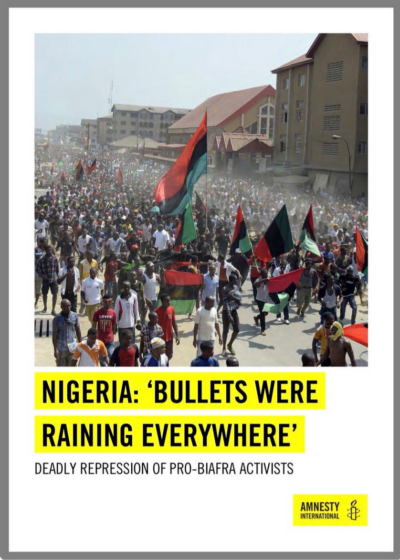
Amnesty International has once again drawn global attention to one of the darkest chapters in Nigeria’s recent history, accusing Nigerian security forces of carrying out a brutal campaign of extrajudicial killings against peaceful pro-Biafra protesters in the South East.
In a statement posted on X, the global human rights organisation revealed that between August 2015 and August 2016, Nigerian security forces, led by the military, killed at least 150 unarmed members of the Indigenous People of Biafra (IPOB) during peaceful protests and gatherings across the region.
Many others, Amnesty noted, were subjected to torture, arbitrary arrests, and inhumane treatment.
According to Amnesty International, despite overwhelming evidence, including eyewitness testimonies and documented reports, the Nigerian authorities have failed to conduct any credible investigation or hold those responsible to account.
Nearly a decade later, justice remains absent, and the families of victims are left with grief, silence, and unanswered questions.
The Amnesty statement reinforces what many communities in the South East have long maintained: that IPOB members were targeted not for violence, but for demanding self-determination through peaceful means.
At the time, IPOB organised rallies, commemorations, and other civil protests, all of which were peaceful. Rather than engage through dialogue or lawful civic processes, the Nigerian state responded with overwhelming military force.
This heavy-handed suppression of a civil movement did not resolve tensions as the movement refused to give up in their peaceful approach towards solving the Nigerian problem; instead, it deepened grievances and entrenched a cycle of violence and mistrust that has only worsened over time.
In response, IPOB has repeatedly called on the international community to establish an independent investigation into the mass killings in the South East.
The group argues that the Nigerian government routinely attributes violence in the region to IPOB without conducting any credible investigation.
While IPOB members are killed and their deaths ignored, the same state institutions, according to critics, hastily label the organisation as responsible for crimes without evidence, while actively frustrating or blocking impartial probes.
Human rights advocates warn that this pattern of selective justice and suppressed investigations reinforces impunity and fuels the very instability the government claims it’s fighting.
Therefore, Biafrans say that IPOB emerged as a shield against as state-sponsored persecution and systematic violence against communities in the Eastern region.
In several instances, IPOB members reportedly helped warn civilians of extrajudicial killings by state security networks, documented abuses, and provided local coordination that saved lives, even as they themselves became primary targets.
Human rights observers say the failure of the Nigerian state to investigate these killings has entrenched a culture of impunity, where security forces operate without fear of consequences.
This pattern, they warn, has since spread beyond the South East, manifesting in mass killings, abductions, and violent repression in different parts of the country.
Amnesty International stressed that the victims and survivors of the 2015–2016 crackdown must receive justice, reparations, and official acknowledgement.
Without accountability, the organisation warned, Nigeria risks repeating the same cycle of violence under different names and in different regions.
As calls for justice grow louder, the Amnesty report stands as a stark reminder that nations cannot bury the past without consequence.
For many in the South East, IPOB is seen not merely as a movement, but as a response to a state that chose bullets over dialogue, and silence over justice.
