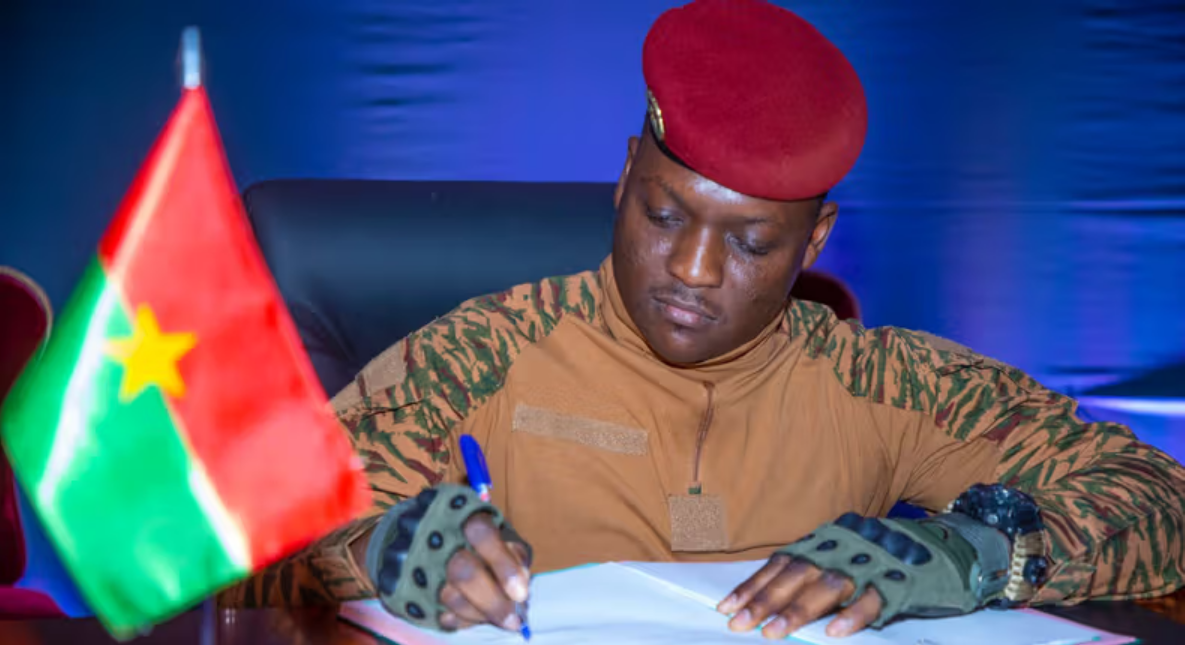
Burkina Faso Unveils $64bn Plan to Transform Economy in Five Years
Burkina Faso has unveiled a $64 billion national development roadmap aimed at transforming the country’s fragile economy over the next five years, in what authorities describe as one of the most far-reaching economic blueprints in the nation’s history.
The new 2026–2030 national development plan seeks to accelerate economic growth, rebuild critical infrastructure, strengthen governance and address long-standing security challenges that have weighed heavily on the West African country’s development prospects.
Officials say the strategy is designed to reshape the country’s economic structure and deliver more inclusive growth, while reducing dependence on foreign aid and unlocking domestic resources.
A bold economic transformation agenda
The roadmap, valued at approximately $64 billion, outlines a comprehensive policy direction that combines large-scale public investment with reforms in governance, education and security.
At the centre of the strategy are four key focus areas:
- Security and social cohesion
- Governance and institutional reform
- Human capital development
- Infrastructure expansion and economic modernization
Government planners believe these pillars will help stabilise the country and unlock its economic potential at a time when Burkina Faso is battling both security threats and development challenges.
According to officials familiar with the blueprint, the programme significantly expands public investment, with about 34.5% of the funding expected to go toward investment and capital transfers.
An economy in need of structural change
Burkina Faso’s economy has long been constrained by structural weaknesses, including over-reliance on agriculture, limited industrial capacity and vulnerability to security disruptions.
About 80 percent of the population relies on subsistence agriculture, making the economy highly sensitive to climate shocks and productivity fluctuations.
Although the country possesses substantial mineral wealth, particularly gold, the mining sector has struggled to generate large-scale employment or strong linkages with the wider economy.
Analysts say this weakness is partly rooted in economic structures shaped during the colonial era under France, policies that the current government has recently begun to dismantle through a series of reforms.
Recent years have seen gradual economic improvement. The economy has recorded modest growth in recent years, supported by agriculture and services.
Still, policymakers acknowledge that without structural reforms, economic progress could remain fragile.
Infrastructure at the heart of the strategy
Infrastructure development forms a critical component of the five-year transformation plan.
The government has already begun implementing major projects aimed at boosting connectivity and economic productivity.
Among them is the 332-kilometre expressway linking Ouagadougou and Bobo-Dioulasso, which is expected to improve freight movement and strengthen domestic trade corridors once completed.
In parallel, the government has launched initiatives such as the Faso Mêbo infrastructure programme, designed to modernise roads, cities and public facilities using locally mobilised resources and labour.
These projects are intended to stimulate economic activity while reducing reliance on foreign funding.
Leveraging natural resources for national development
Another key component of the transformation strategy is the government’s push to increase national control over mineral resources, particularly gold.
Burkina Faso ranks among Africa’s leading gold producers, and authorities have moved in recent years to expand state involvement in the mining sector to ensure greater benefits flow to the population.
Mining revenues are expected to play a significant role in financing the country’s development agenda, while supporting broader economic diversification.
Despite the scale of the new roadmap, analysts say its success will depend largely on the government’s ability to manage security challenges and maintain political stability.
Burkina Faso has faced persistent terrorist attacks and humanitarian pressures in recent years, factors that have strained public finances and disrupted economic activity.
Nevertheless, authorities insist the plan signals a new phase in the country’s development strategy, focused on self-reliance, infrastructure expansion and economic restructuring.
If implemented successfully, the five-year programme could mark a turning point for the Sahel nation, positioning Burkina Faso to transition from a largely subsistence-based economy to a more diversified and resilient economic system.
For a country long defined by economic hardship and insecurity, the roadmap represents an audacious attempt to rewrite its development story.
