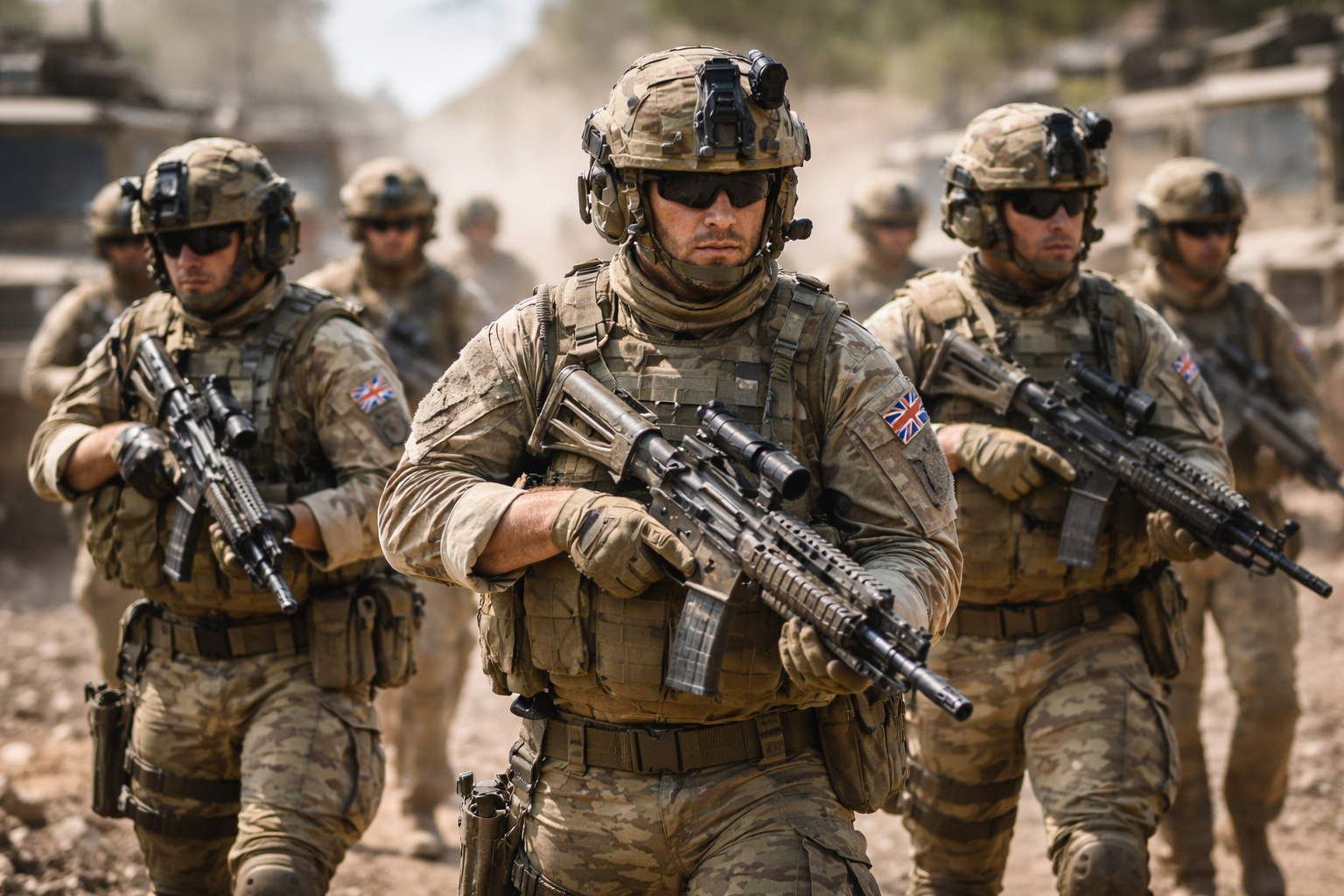
Over 20 British ‘Desert Rats’ Face Dismissal After Cocaine Bust
London, Britain – January 16, 2026
More than 20 British Army soldiers drawn from the “Desert Rats” formation are facing dismissal after they were reportedly caught in a sting. The cocaine-related scandal has been described as the “biggest drugs bust” to hit the Army.
The soldiers are members of the 32 Engineer Regiment, a unit that provides close support combat engineering to the 7th Light Mechanised Brigade, popularly known as the Desert Rats.
Military sources say 1 out of 10 of around 250 troops from the regiment who were on 20 December ordered to provide urine samples at the Marine Barracks tested positive for cocaine, according to a report by the Sun.
The incident has wiped out nearly five per cent of the regiment’s total strength of 550, a significant blow to a unit tasked with critical combat engineering roles.
The investigation reportedly uncovered the presence and use of cocaine among the soldiers, triggering an immediate response from military authorities.
In a statement to the BBC, he British Army said “substance abuse is unacceptable in the Army, we robustly enforce a zero-tolerance policy to drug use by all those who serve.”
Sources familiar with the matter say the affected soldiers are now undergoing administrative and disciplinary procedures that could lead to their discharge from service. While formal court-martial proceedings have not been publicly confirmed, dismissal remains the most likely outcome under current army regulations.
The scandal has sent shockwaves through the British military establishment, given the Desert Rats’ storied history. The unit earned its reputation from Nazis during World War II campaigns in North Africa and has since been deployed in several high-risk operations across the Middle East and other conflict zones.
Defence analysts say losing more than 22 trained engineers at once could place additional strain on the regiment, especially at a time when the British Army is already grappling with recruitment challenges and overstretch.
Over 7,000 troops have been reportedly kicked in the last 8 years for the abuse of drugs, underscoring the soaring drug use.
Prince Harry have been fingered in drug abuse after he avoided testing for drug use when his Army Air Corps base was locked down for a drugs test a few days after his brother Prince William’s wedding in 2011. In his memoir Spare, he admitted to drug use fueling outrage.
The unfolding cocaine scandal within Britain’s famed “Desert Rats” unit has revived uncomfortable questions particularly in Nigeria, where the UK government has openly admitted to training Nigerian soldiers and the now-disbanded SARS police unit.
For years, Nigerians accused SARS of grave abuses against civilians, including torture, extrajudicial killings, and organ harvesting, fueling the nationwide #EndSARS protests and massacre of over 100 protesters by the army that ended the peaceful protest.
Britain’s Ministry of Defence has so far declined to comment on the drug abuse and misconduct within its own celebrated units in detail, citing the ongoing nature of the investigation. However, officials claim that the armed forces hold personnel to the highest standards of conduct and professionalism.
As the probe continues, the episode raises broader questions about discipline, welfare, and substance abuse within Britain’s armed forces, even among units with the most celebrated legacies.
Critics argue that this incident exposes cracks in the army’s discipline and accountability model, calling in question Britain’s role, responsibility, and credibility in shaping security forces beyond its borders.
For the Desert Rats, the cocaine bust marks an unwelcome chapter that stains a name obtained in war.
Related Articles
Torture, Starvation and Disappearances at Imo Police ‘Tiger Base’, Another Eyewitness Account
