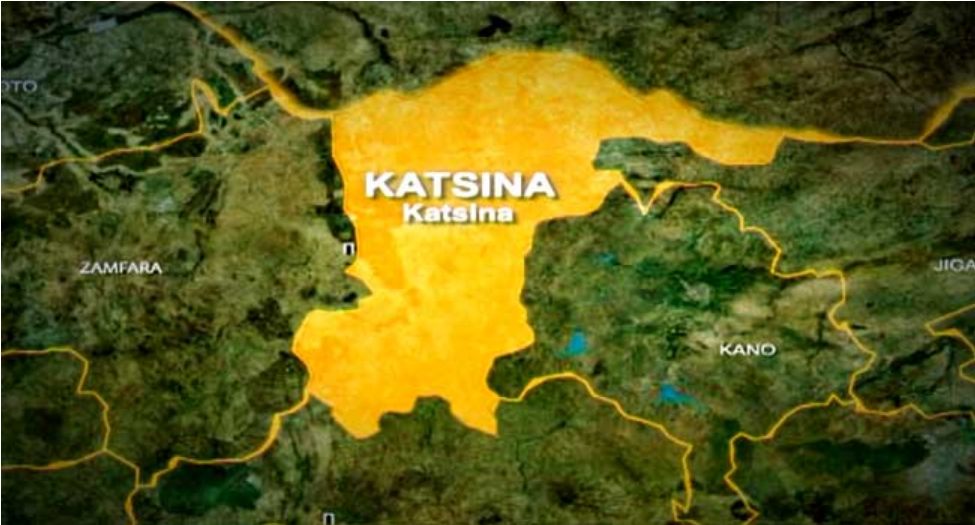
Peace for Whom? Katsina’s Dangerous Excuse for Freeing 70 Suspected Terrorists
Nigeria's government-backed “peace talks” are quietly transformed into a revolving door of freedom for terrorists, eroding justice, emboldening violence, and rewarding terror over the rule of law
Kastina, Nigeria – The Katsina State Government’s defence of its decision to release 70 suspected terrorists has been described as not only unconvincing but also an insult to the intelligence of Nigerians and a slap in the face of victims who have buried loved ones, paid ransoms, lost farms, and fled ancestral homes in terror.
According to the government, the planned release forms part of a so-called peace agreement with terrorists, the government renamed “repentant bandits,” a strategy officials claim has helped secure the release of abducted persons and reduce violence in some communities. But stripped of bureaucratic perfume, this narrative collapses under the weight of logic, law, and lived reality.
The leaked letter, dated January 2, 2026, and marked “SECRET,” was addressed to the Chief Judge of Katsina State. It requested the intervention of the Administration of Criminal Justice Monitoring Committee to help facilitate the release of the suspected terrorists.
Critics argue that “the terrorism that has been unfolding in Katsina should no longer be seen as a security failure. It is a state-managed fraud dressed up as counterterrorism, a grotesque theatre where killers are coddled and victims are forgotten.”
“The leaked secret memo indicate that terrorism in Katsina did not thrive in a vacuum. It grew because the state fed it oxygen.”
Year after year, armed groups burned villages, slaughtered farmers, kidnapped children, and imposed taxes on entire communities, yet the government’s response oscillated between silence and appeasement. Today, that appeasement has hardened into policy.
When Criminality Is Rebranded as Negotiation
The idea that terrorists, many of whom are standing trial for murder, kidnapping, and terrorism-related offences, should be released in the name of peace raises a basic question: peace for whom?
For rural communities in Katsina, peace has meant mass graves, burnt villages, and farming under the shadow of AK-47s.
For widows and orphans, peace has meant silence from the state and justice permanently deferred. Yet the government now insists that freeing suspects accused of orchestrating this terrorism is a necessary sacrifice.
What exactly is being sacrificed, and by whom?
Certainly not by the terrorists, who get freedom without accountability.
Certainly not by political elites, who remain insulated behind armed escorts and bullet proof cars.
The sacrifice, once again, is demanded from ordinary citizens.
A State That Negotiates With Terror but Lectures Citizens on Law
Katsina’s justification exposes a dangerous double standard. On one hand, citizens are lectured to respect the rule of law, trust the courts, and reject vigilantism. On the other, the same state quietly writes letters marked “secret,” urging judicial intervention to free suspected terrorists already facing trial.
If courts can be bypassed for so-called peace deals, then trials become mere theatre, arrests lose meaning, and the justice system itself is reduced to a bargaining chip.
This collapse of judicial integrity is already evident in numerous court decisions, most notably the continued persecution of Mazi Nnamdi Kanu.
Despite his illegal abduction from Kenya, an act that violated both Nigerian and international law, and despite multiple court rulings that discharged and acquitted him, the Nigerian state persists in using the courts as instruments of political punishment rather than justice.
Today it is 70 suspects. Tomorrow it may be 200. The unanswered question remains: how many terrorists has the government already freed under the cover of negotiation?
In such an environment, arresting terrorists becomes meaningless. Every gunman now understands that violence is a faster route to negotiation than obedience is to justice.
Kidnapping has evolved into a thriving enterprise carried out with reckless confidence, emboldened by a government that has not only normalized negotiations with kidnappers locally but has taken the practice to the international stage, effectively legitimizing the crime.
Meanwhile, ordinary members of IPOB are casually branded terrorists without evidence. They are hunted, abducted, detained, and killed, subjected to inhuman treatment for belonging to a peaceful movement.
A state that criminalizes unarmed citizens while courting armed terrorists is not merely failing its people. It is endangering humanity itself.
The Myth of ‘Repentant Bandits’
The government’s repeated use of the phrase “repentant bandits” deserves scrutiny. Repentance, in any meaningful sense, involves confession, restitution, disarmament, and consequences.
What Katsina is offering instead is amnesty without truth, forgiveness without justice, and reintegration without accountability.
No public list of crimes.
No transparent disarmament process.
No compensation for victims.
No assurance that those released will not return to the forests, better emboldened and better connected.
In fact, Nigeria’s recent history shows that many so-called repentant fighters simply rebrand, regroup, and return to violence once negotiations break down or incentives dry up.
Rewarding Violence, Punishing the Law-Abiding
Perhaps the most corrosive effect of this policy is the message it sends: crime pays, patience does not.
Farmers who obey the law are taxed by the same terrorists they brand as “bandits”, now “repented bandits.”
Villagers who refuse to collaborate with the terrorists are attacked.
Communities and individuals that arm themselves for defence are criminalised.
But those who kidnap, kill, and terrorise are invited to the negotiating table and escorted back into society.
This inversion of morality is how states rot from within.
A Government Out of Touch With Its Own Crisis
If Katsina’s leadership truly believes releasing suspects accused of heinous crimes will bring lasting peace, then it has fundamentally misunderstood the nature of the crisis it faces.
Terrorism in the Nigeria is not a misunderstanding to be settled with handshakes. It is an entrenched criminal economy fueled by weapons, extortion, and state weakness.
You do not dismantle such a system by emptying your prisons.
You dismantle it by strengthening justice, protecting victims, and making crime costly, not convenient.
This Is Not Peace, It Is Capitulation
What Katsina State calls a peace strategy looks far more like capitulation dressed up as pragmatism.
It erodes public trust, mocks the suffering of victims, and signals to every terrorist group that the Nigerian state can be on their corner.
A government that cannot protect its people must at least not betray them. Releasing suspected terrorists is not reconciliation. It is surrender.
When a government releases suspected terrorists under the banner of “peace talks,” it is no longer fighting terrorism. It is sponsoring it.
And history has never been kind to states that negotiate their own authority away.
Death Sentence for Self-Defense Exposes Why Nigeria Is a Failed State
