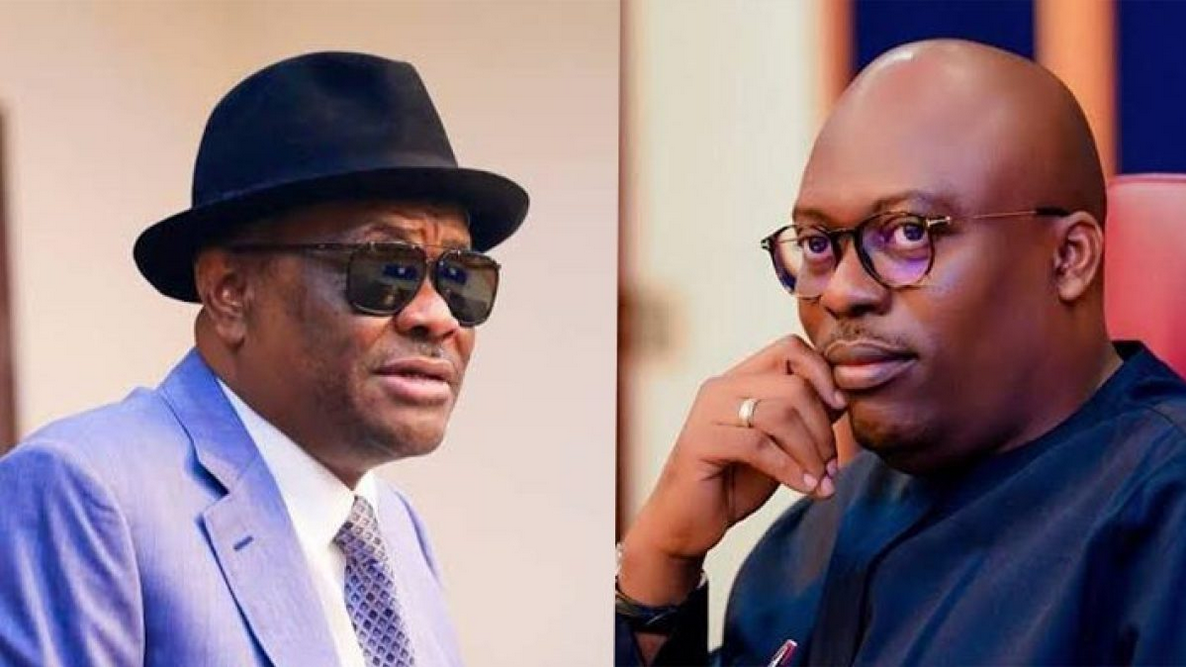
Political Storm in Port Harcourt: Rivers Assembly Launches Impeachment Proceedings Against Governor Fubara
Port Harcourt, Rivers State – January 8, 2026
Political tension has taken a sharp turn in the oil-rich heartland of Nigeria with the Rivers State House of Assembly formally initiating impeachment proceedings against Governor Siminalayi Fubara and his deputy, Ngozi Odu.
The dramatic development unfolded on Thursday, January 8, 2026, as lawmakers serving under the leadership of Speaker Martins Amaewhule read aloud a notice alleging gross misconduct and constitutional breaches, marking the latest chapter in a long-running and bitter power struggle within the state.
During plenary, the Majority Leader, Major Jack, presented a notice signed by 26 of the State Assembly’s members, invoking Section 188 of the 1999 Constitution as the legal basis for the impeachment move.
Among the seven counts cited were accusations that Governor Fubara had approved extra-budgetary spending without legislative consent, withheld funds destined for the Rivers Assembly Service Commission, refused to obey a Supreme Court ruling on financial autonomy for the legislature, and infamously authorised the demolition of the House of Assembly complex, acts which lawmakers argue amount to a flagrant violation of constitutional governance.
The Speaker pledged to serve the official notice on the governor “within seven days,” beginning the constitutional timeline for the impeachment process to unfold.
If the allegations withstand scrutiny and proceed through due process, the situation could culminate in a full vote by the legislature on whether to remove the governor and his deputy from office, a step that would require clear evidence and adherence to statutory procedure.
The impeachment move comes against the backdrop of a lingering political feud between Governor Fubara and his predecessor, Minister of the Federal Capital Territory (FCT) Nyesom Wike, a rift that has repeatedly threatened stability in Rivers State.
Lawmakers aligned with Wike have long accused Fubara of reneging on commitments made under a peace deal brokered by President Bola Ahmed Tinubu in 2025, and of governing in ways that marginalise the legislature.
However, the impeachment push has drawn sharp criticism from the Rivers State chapter of the All Progressives Congress (APC) and allied groups who warn that the process could destabilise governance in the state.
The APC described the move as “untenable” and urged lawmakers, especially those elected on the party’s platform, to resist what it called politically motivated actions aimed at undermining the state’s leadership.
Party supporters have also argued that the impeachment effort violates the spirit, if not the letter, of the peace accord facilitated by the President.
The rift between Nyesom Wike and Governor Siminalayi Fubara is widely traced to the governor’s alleged refusal to submit to post-office control by his predecessor, who is accused by critics of attempting to entrench himself as the political godfather of Rivers State.
Reports indicate that Fubara resisted pressure on how state resources should be deployed, insisting on exercising the full constitutional authority of his elected office. This stance is said to have ruptured the fragile power arrangement that followed the transition, turning governance in the state into a battleground between loyalty to the past and the independence of the present.
The crisis escalated further following claims that Wike leveraged his influence to persuade President Bola Ahmed Tinubu to suspend Governor Fubara from office for six months, a move many legal experts and civil society voices described as illegal and a grave assault on democratic norms.
Critics argue that an elected governor can only be removed through constitutional impeachment, not executive suspension.
The controversy deepened after a court ruling by Justice James Omotosho was cited as giving judicial cover to the action, drawing sharp comparisons to past rulings by the same judge, including the recent life sentence he handed to Mazi Nnamdi Kanu, leader of IPOB, over his peaceful call for a UN-supervised referendum.
To many observers, these developments symbolise a troubling convergence of executive power and judicial authority, raising fears about the erosion of the rule of law and democratic accountability in Nigeria.
The crisis continues to prove Nigeria as a failed state, with observers watching closely to see if Wike induced impeachment process will advance through the constitutional stages, including fair hearing and legislative voting, or whether further interventions from federal authorities, political allies, or the courts might alter the course of events. The direction this will go will determine whether Fubara got the backing of the President or not.
For now, Rivers State remains in a high-stakes constitutional battle that could redefine the balance of power at both state and national levels.
